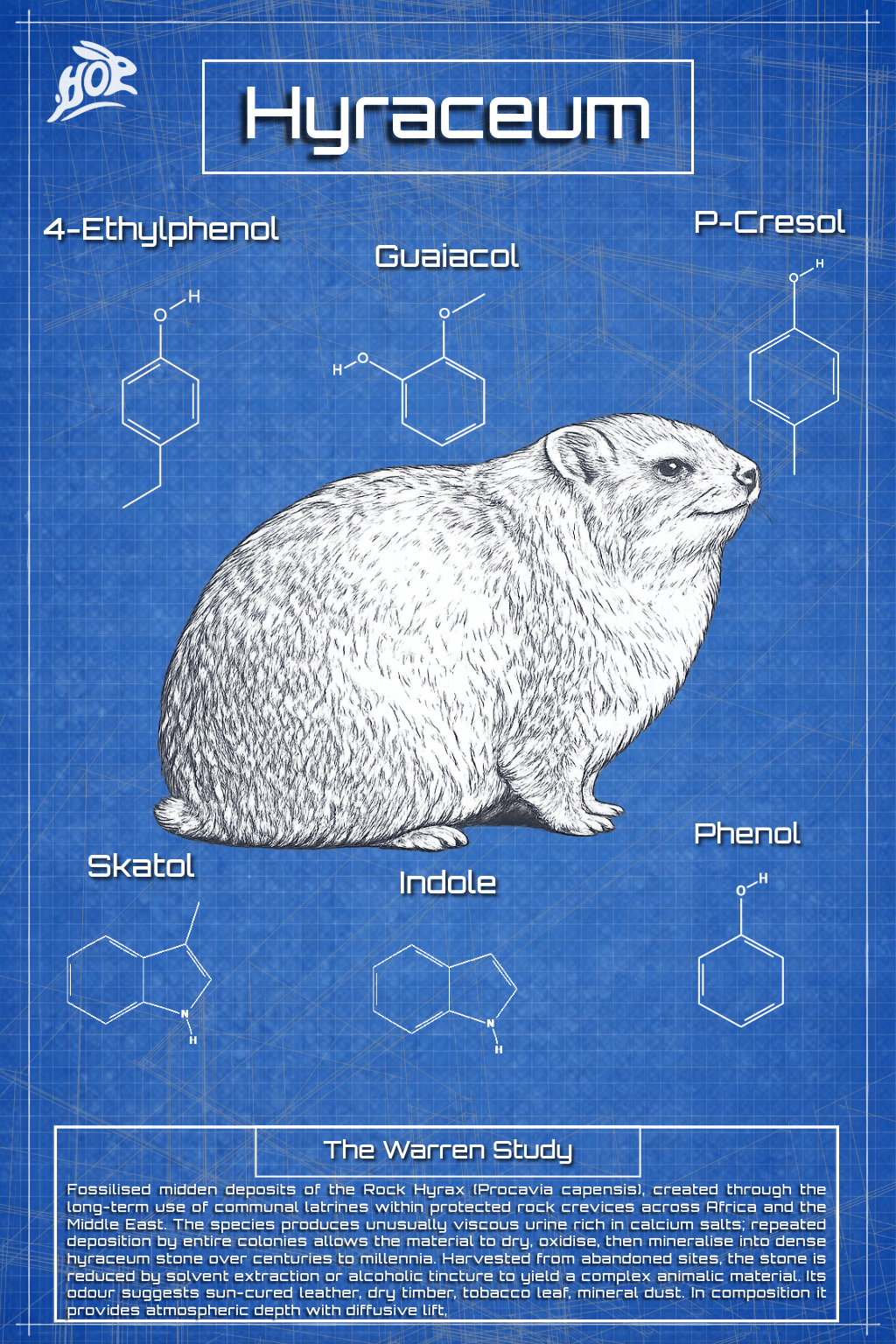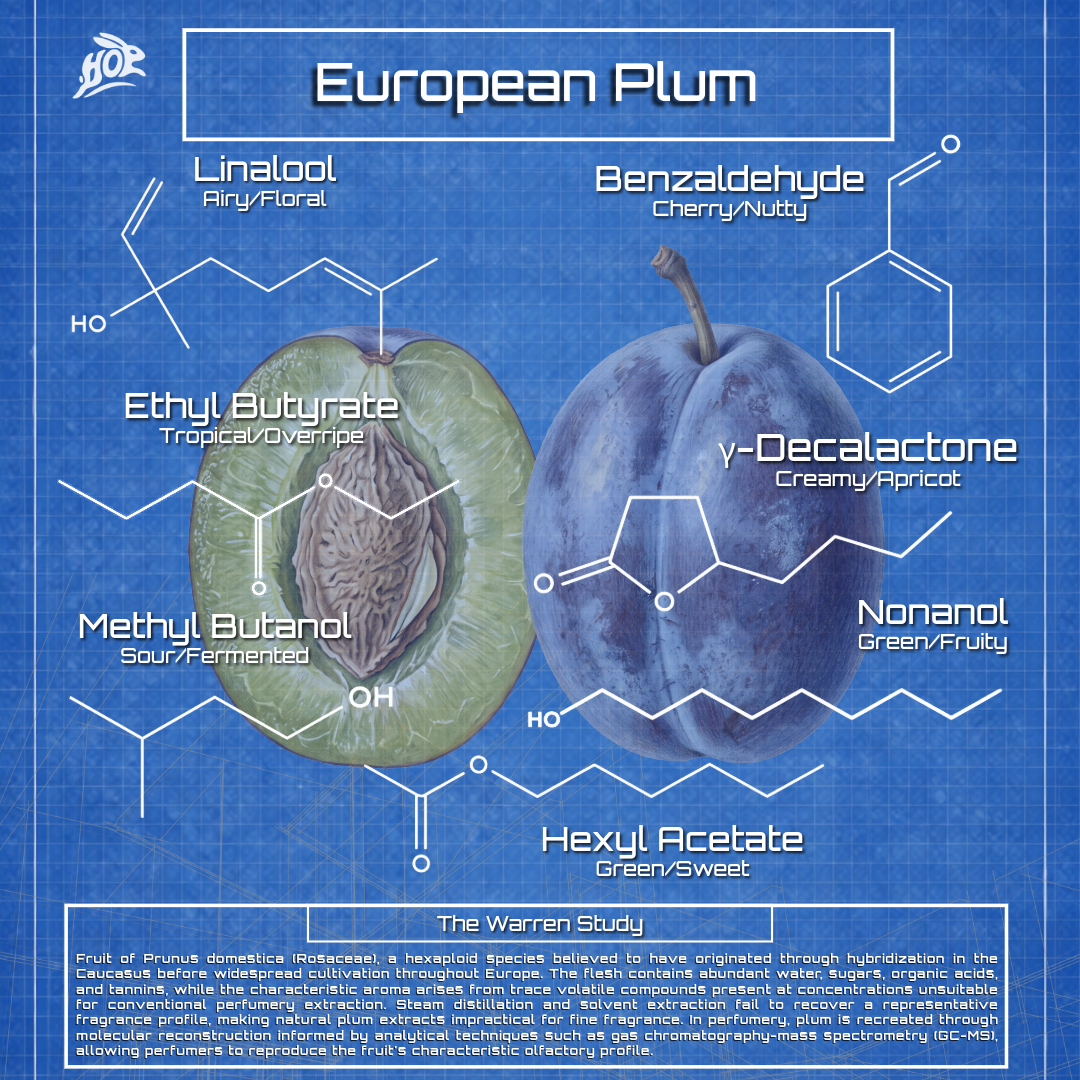
Asian and European Plum: Prunus
Why doesn't plum have an essential oil? Explore the chemistry of European (Prunus domestica) and Chinese (Prunus salicina) plums, discover why their aroma cannot be captured through conventional extraction, and learn how GC-MS analysis, aroma chemistry, and molecular reconstruction allow perfumers to recreate one of fine fragrance's most recognizable fruit accords from an otherwise unextractable fruit.
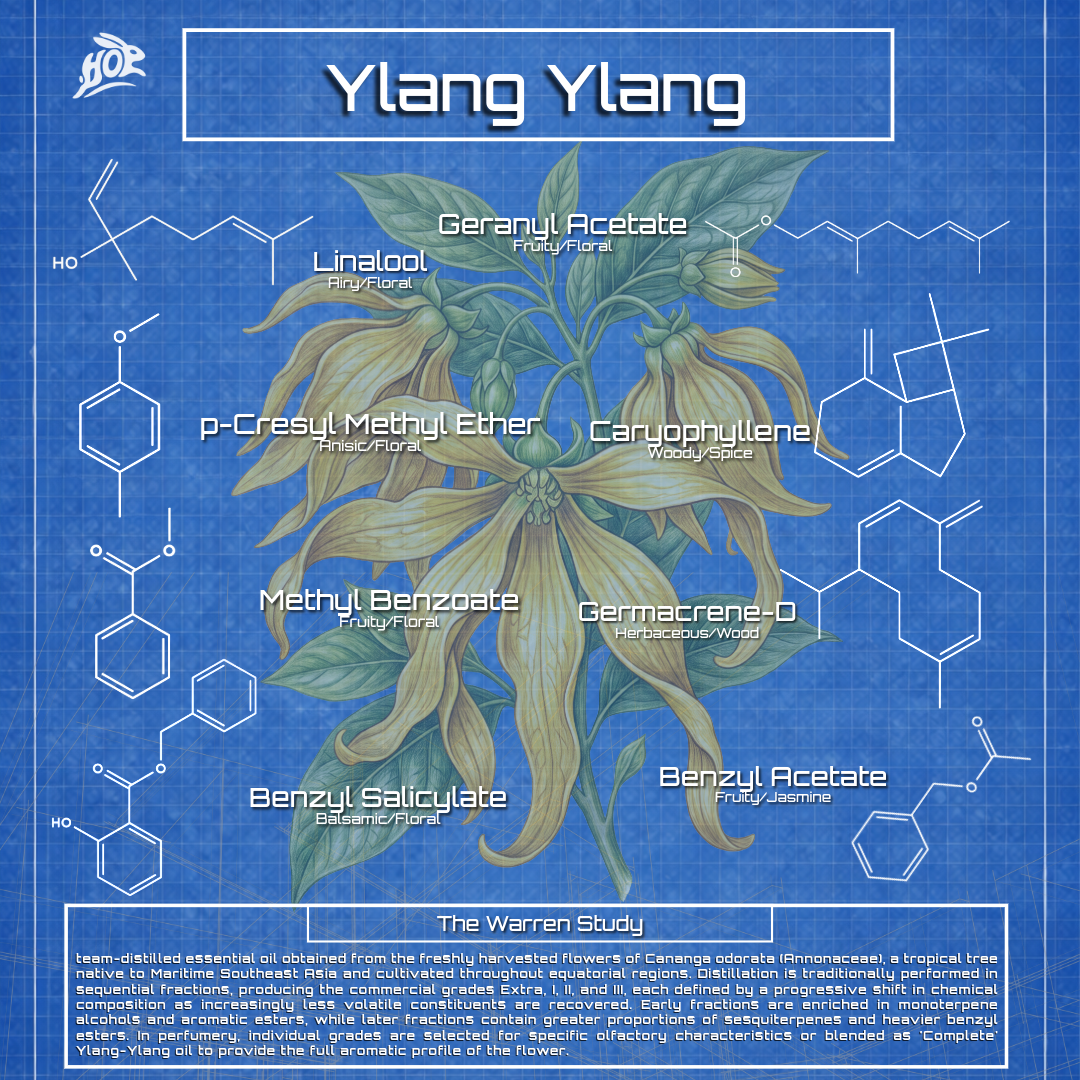
Ylang-Ylang — Cananga odorata
Why does Ylang-Ylang come in different grades? Explore the science of Cananga odorata, from magnoliid botany and steam distillation to the chemistry behind Extra, Grades I, II, III, and Complete oils. Discover how the molecular fingerprint shifts throughout distillation, creating distinct aromatic profiles that have shaped fine perfumery for more than a century.
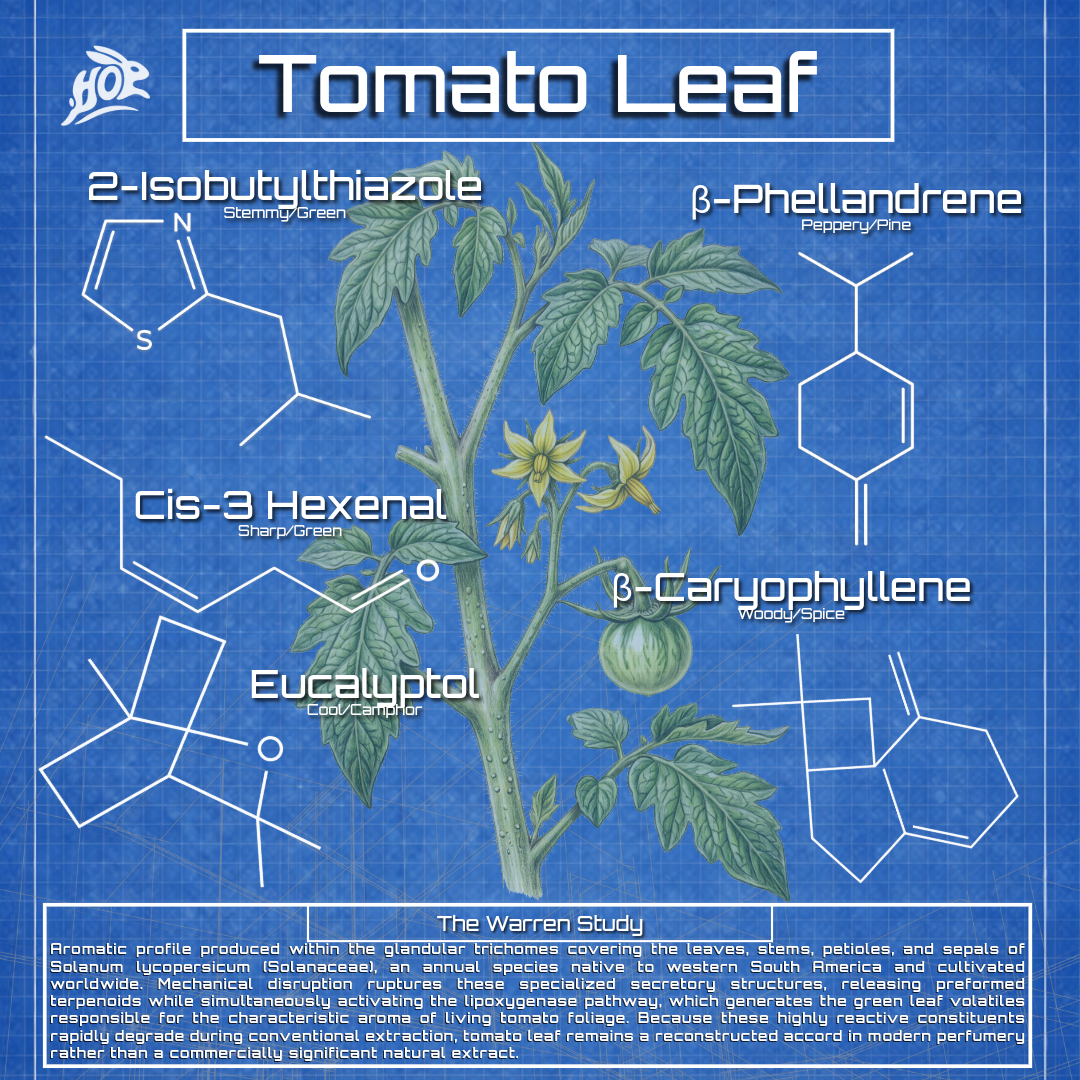
Tomato Leaf - Solanum lycopersicum
Why do tomato leaves smell so distinctive? Explore the science of Solanum lycopersicum, from the glandular trichomes that create its unmistakable aroma to 2-isobutylthiazole, the molecule that transformed modern perfumery. Learn why tomato leaf cannot be distilled into an essential oil and how perfumers faithfully recreate its vivid green scent.
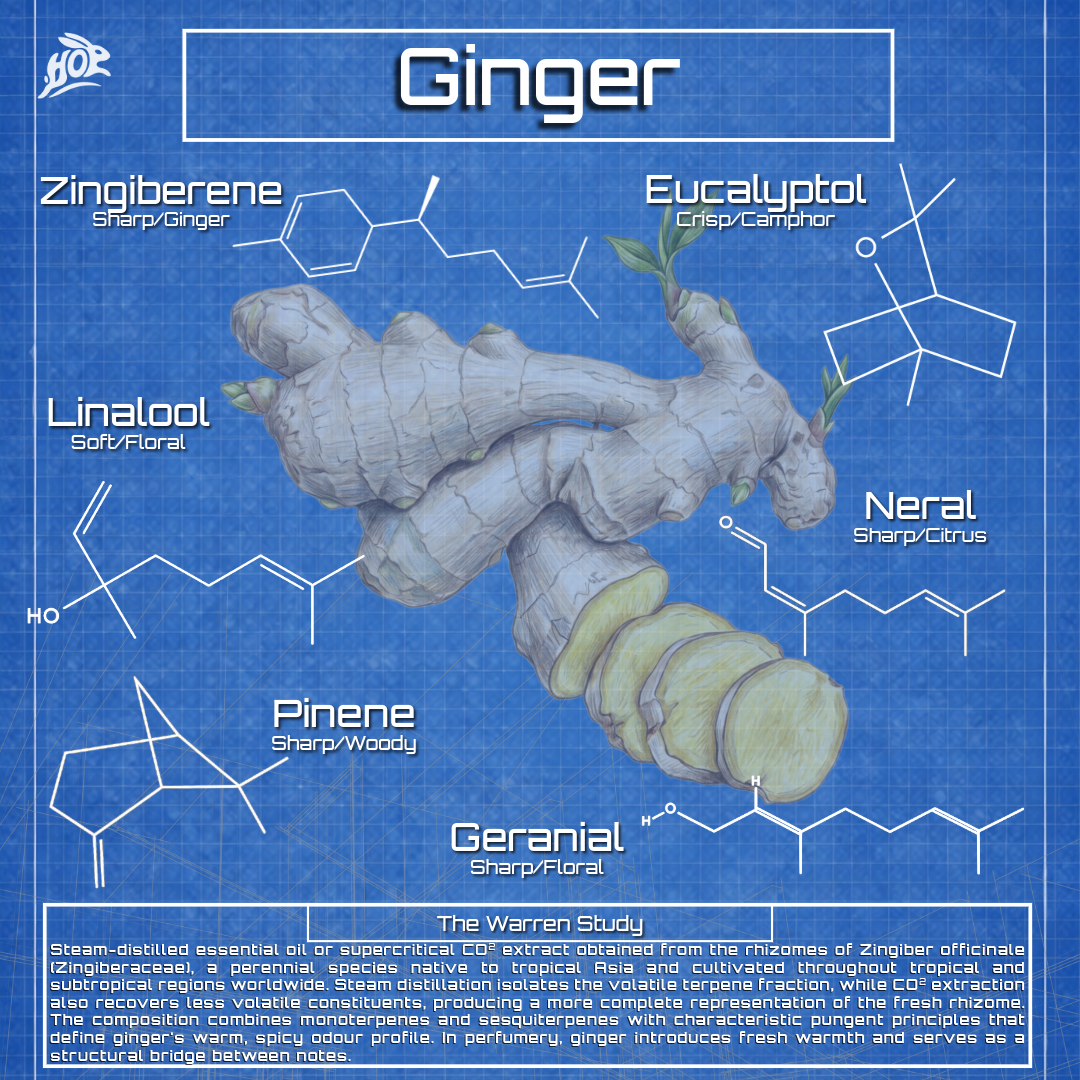
Ginger - Zingiber officinale
What gives ginger its unmistakable aroma? Explore the science of Zingiber officinale, including rhizome biology, essential oil production, CO₂ extraction, major aroma compounds, and why ginger remains one of perfumery's most important spice materials.
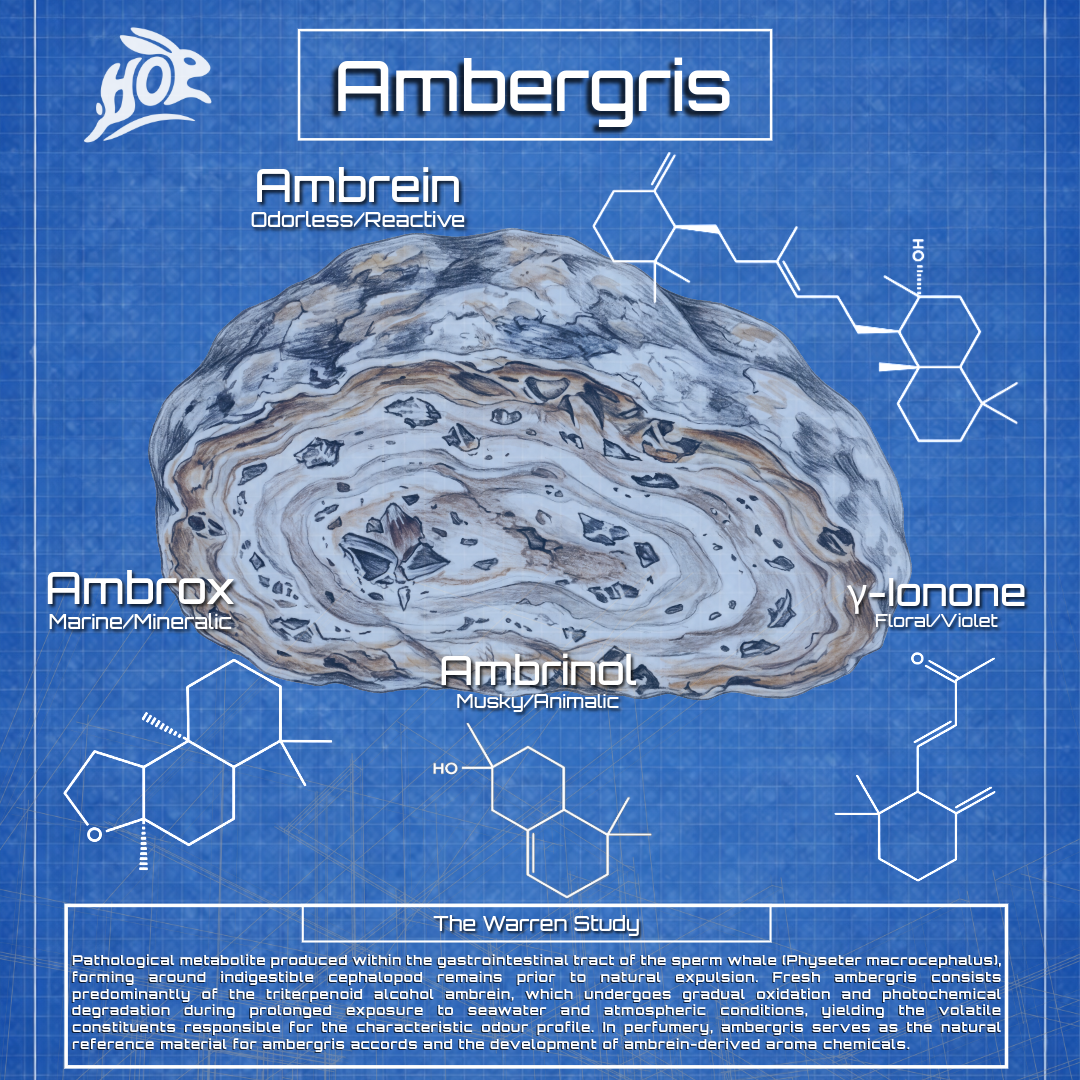
Ambergris
Ambergris is a rare waxy concretion formed in the gastrointestinal tract of the sperm whale. This Warren Study examines how ambergris forms, the chemistry of ambrein, oxidation and aging, the development of its scent, and why ambergris became one of the most important natural materials in perfume.
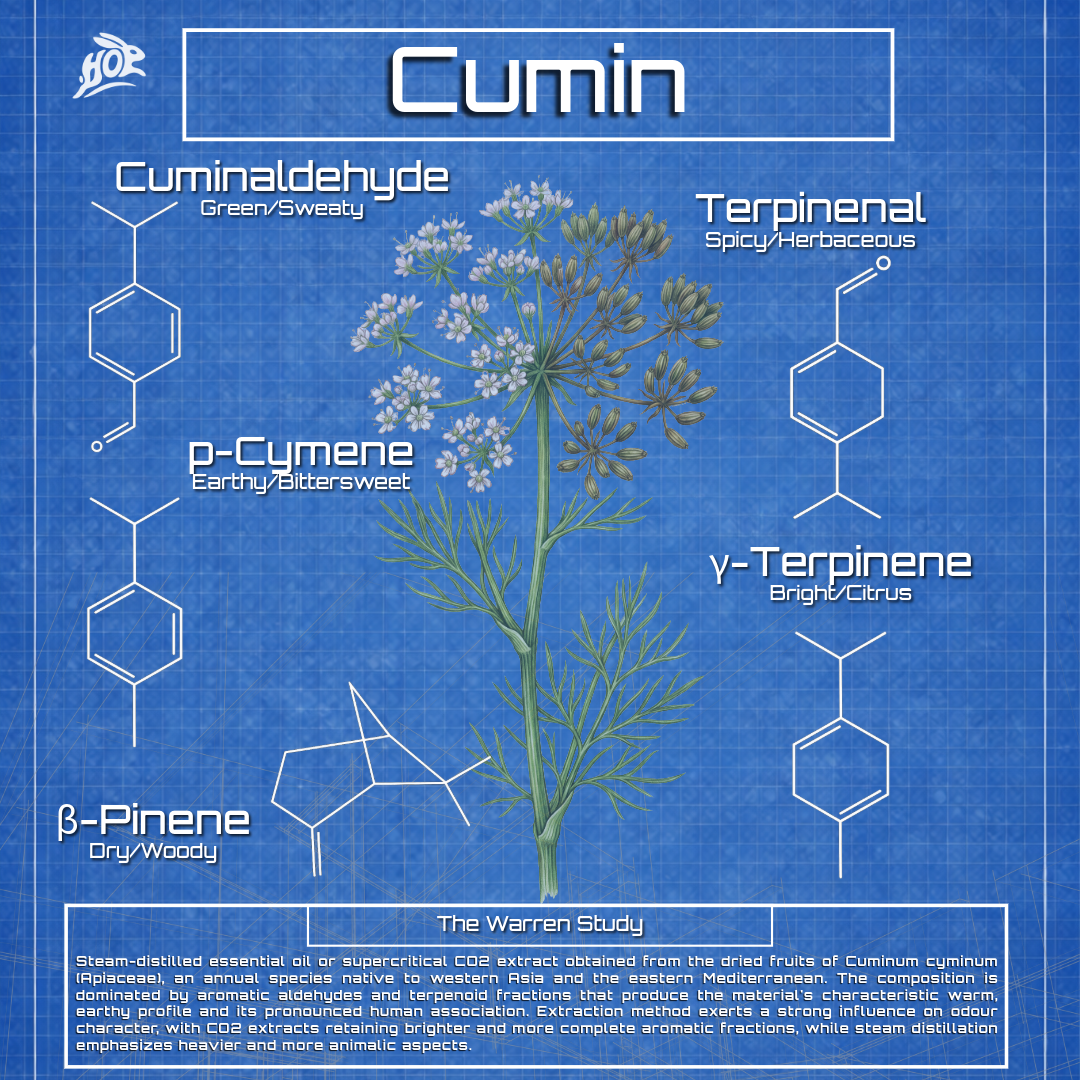
Cumin- Cuminum Cyminum
Cumin may be the most celebrated seed in the Apiaceae family, prized for thousands of years in cuisine, medicine, and perfumery. Explore the chemistry of Cuminum cyminum, from essential oil and CO₂ extraction to cuminaldehyde and its role in modern muguet accords, animalic effects, and the warm, human character that master perfumers use under restraint.
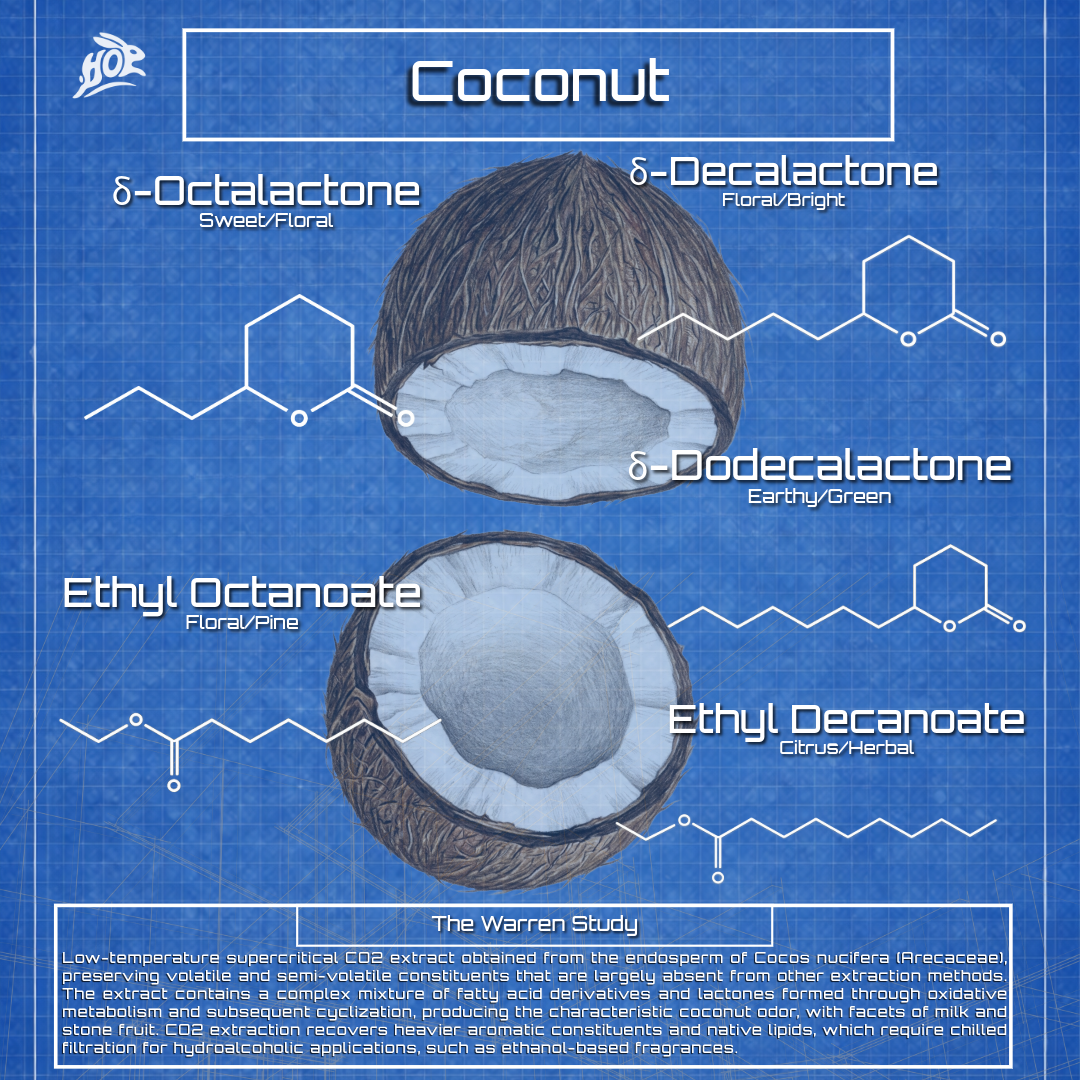
Coconut- Cocos nucifera
Coconut in perfumery is far more than the fruit itself. The creamy aroma comes from lactones formed as coconut fatty acids oxidize and cyclize, while modern CO₂ extraction preserves aromatic compounds that steam distillation leaves behind. Explore the chemistry, extraction, and perfumery use of Cocos nucifera, and discover why natural coconut remains one of fragrance's most misunderstood materials.
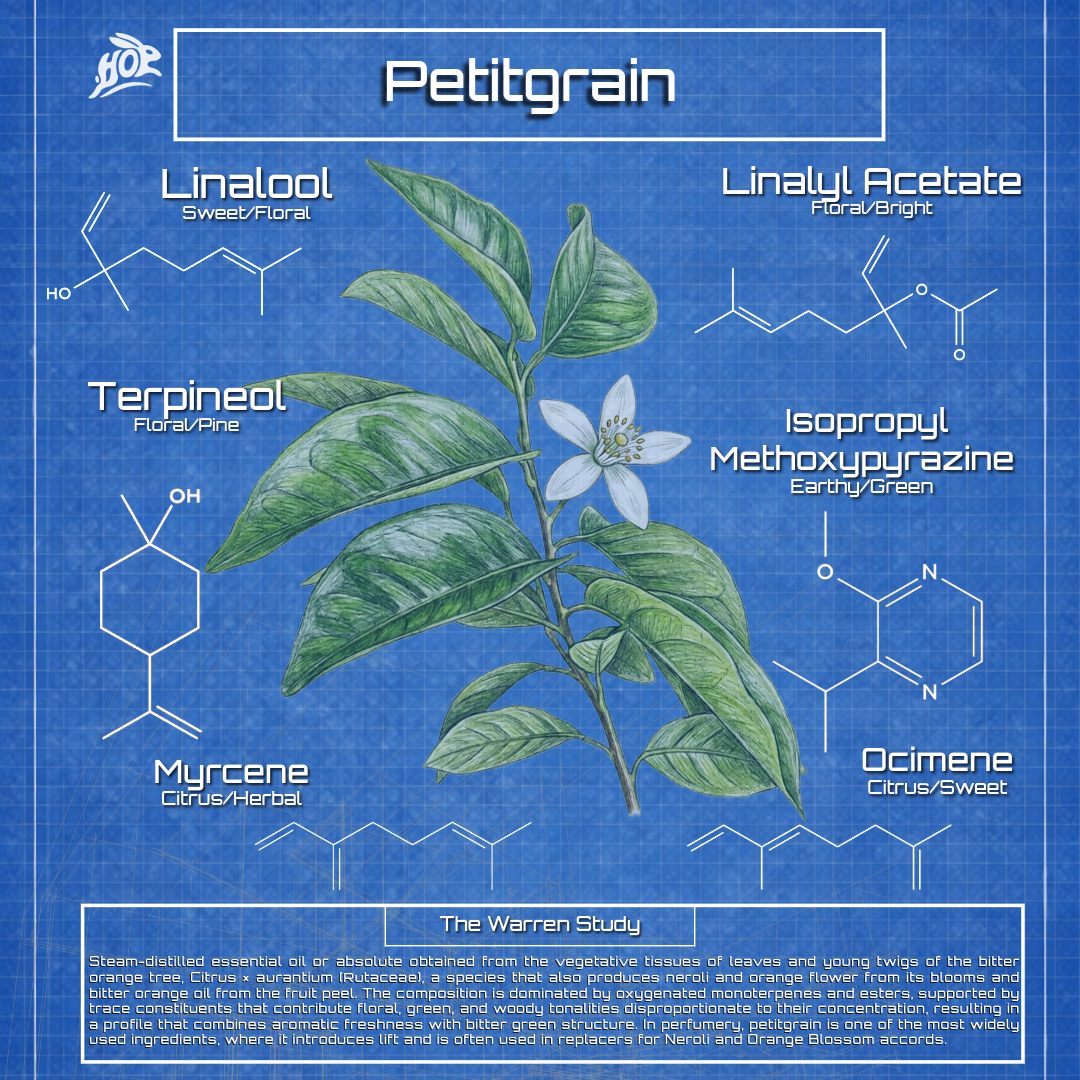
Petigrain- Bigaradier, Bitter Orange Tree; Citrus x aurantium
The bitter orange tree gives perfumery four distinct materials: bitter orange from the peel, neroli and orange blossom from the flower, and petitgrain from the leaves and young twigs. Often overshadowed by its more famous relatives, petitgrain occupies the space between citrus and green aromatics, carrying a chemistry that has shaped colognes, fougères, and floral compositions for centuries. Explore the extraction, chemistry, and perfumery use of Citrus × aurantium's most overlooked material.
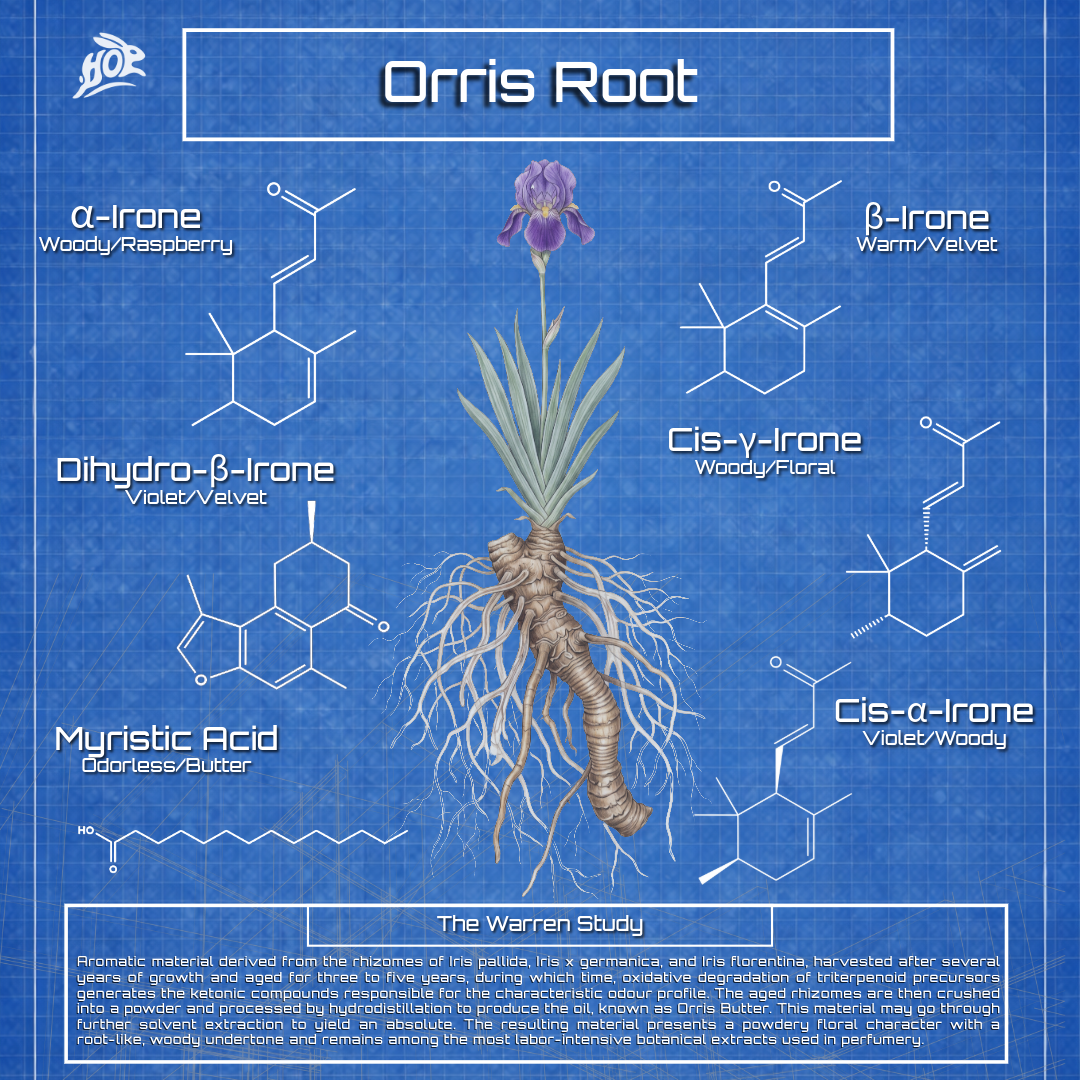
Orris Root (Iris)
Most people admire the iris for its flower, yet perfumery values the rhizome hidden beneath the soil. Harvested from Iris pallida, Iris germanica, and Iris florentina, orris requires years of maturation before extraction develops the scent profile that made it one of perfumery's most prized botanical materials. Explore the science, cultivation, and chemistry behind the material known as orris root with the Blueprint here.
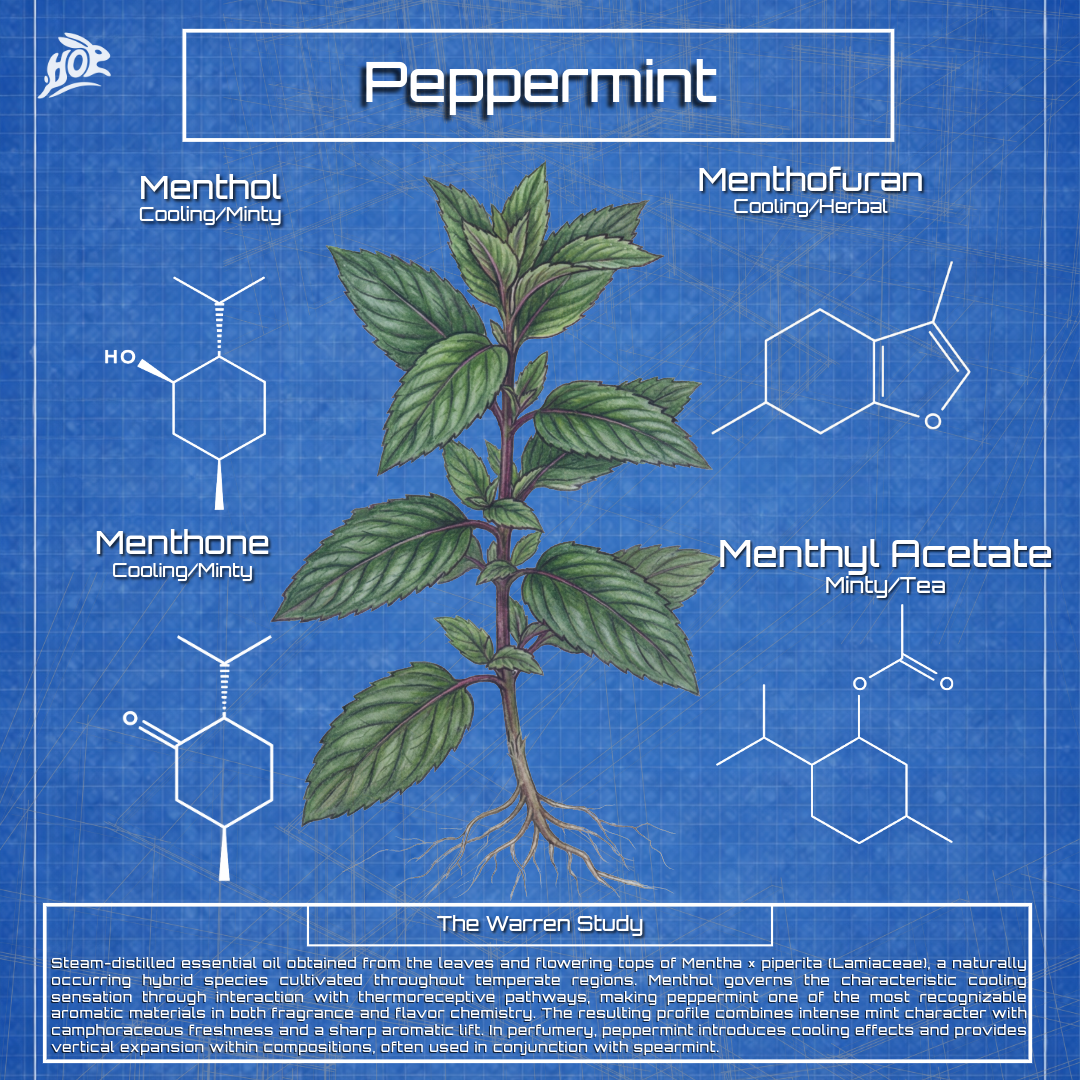
Mint- Lamiaceae Mentha
Explore the chemistry of mint in perfumery through Mentha spicata (spearmint) and Mentha × piperita (peppermint). Learn how carvone defines the sweet, green character of spearmint, how menthol creates peppermint's cooling sensation, and why these essential oils play distinct roles in aromatic, citrus, herbal, and fougère fragrance composition.
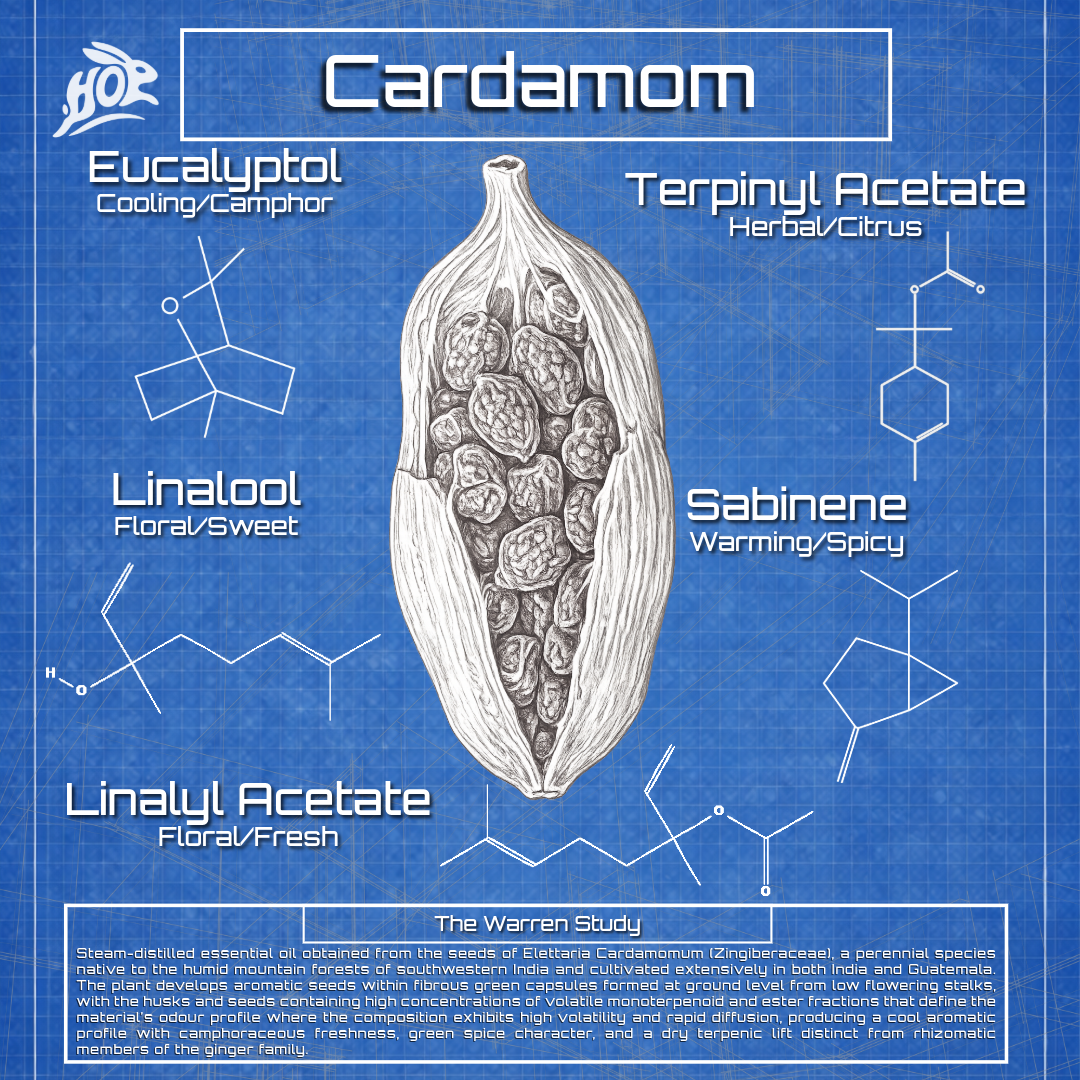
Cardamom - Elettaria Cardamomum (Zingiberaceae)
This cooling spice from the Ginger family has a long storied history in perfumery, dating back before the Egyptians.
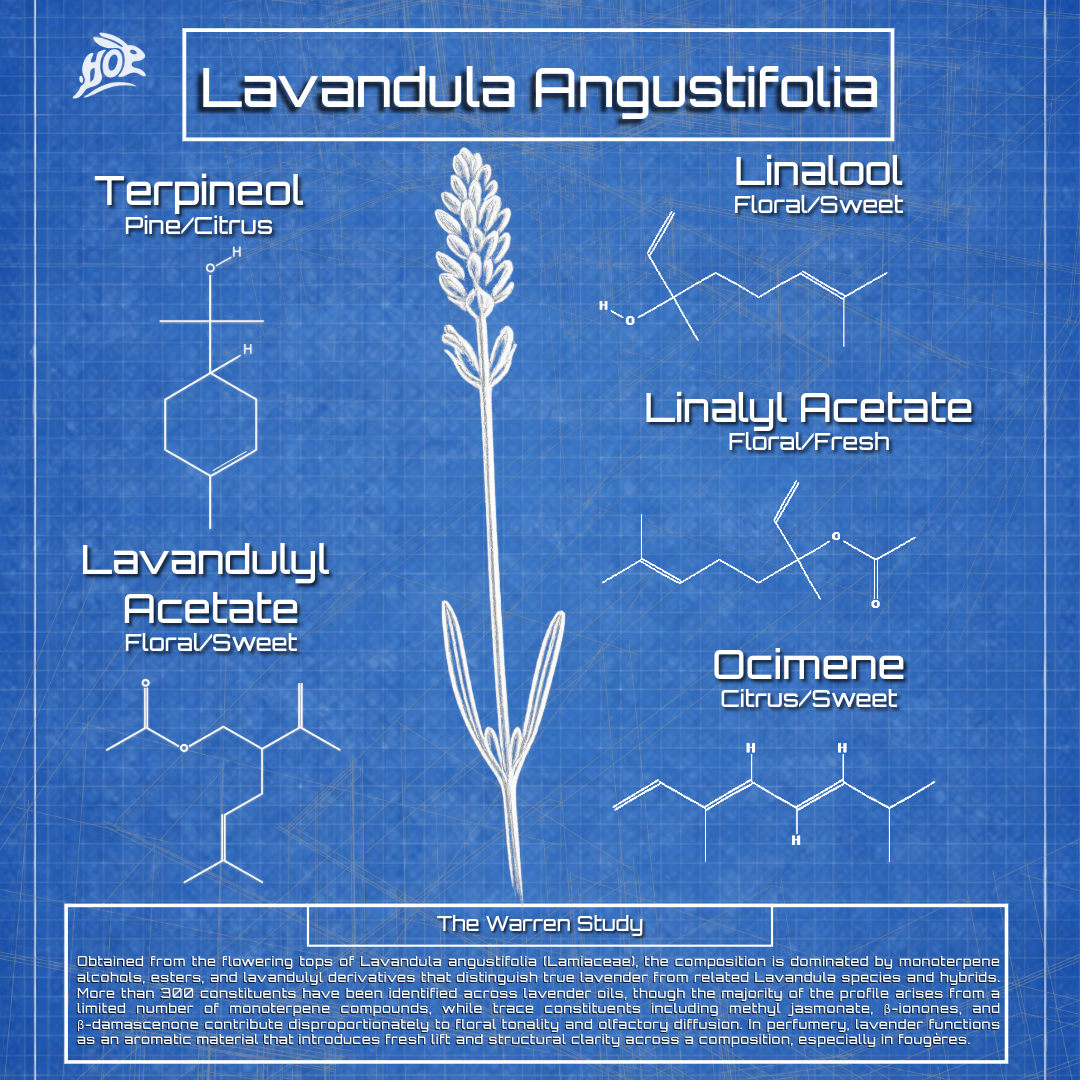
Lavandula Angustifolia- True Lavender
100,000 tons of flowers are harvested each year from the Lavandula species for use in the Perfume industry and favored in fougères. The vast majority (¾) of this is Lavandula Intermedia, or Lavandin, and another ¼ is Lavandula Latifolia (spike lavender). The prettiest of them all is the high elevation Lavandula Angustifolia, the true lavender known as English Lavender.
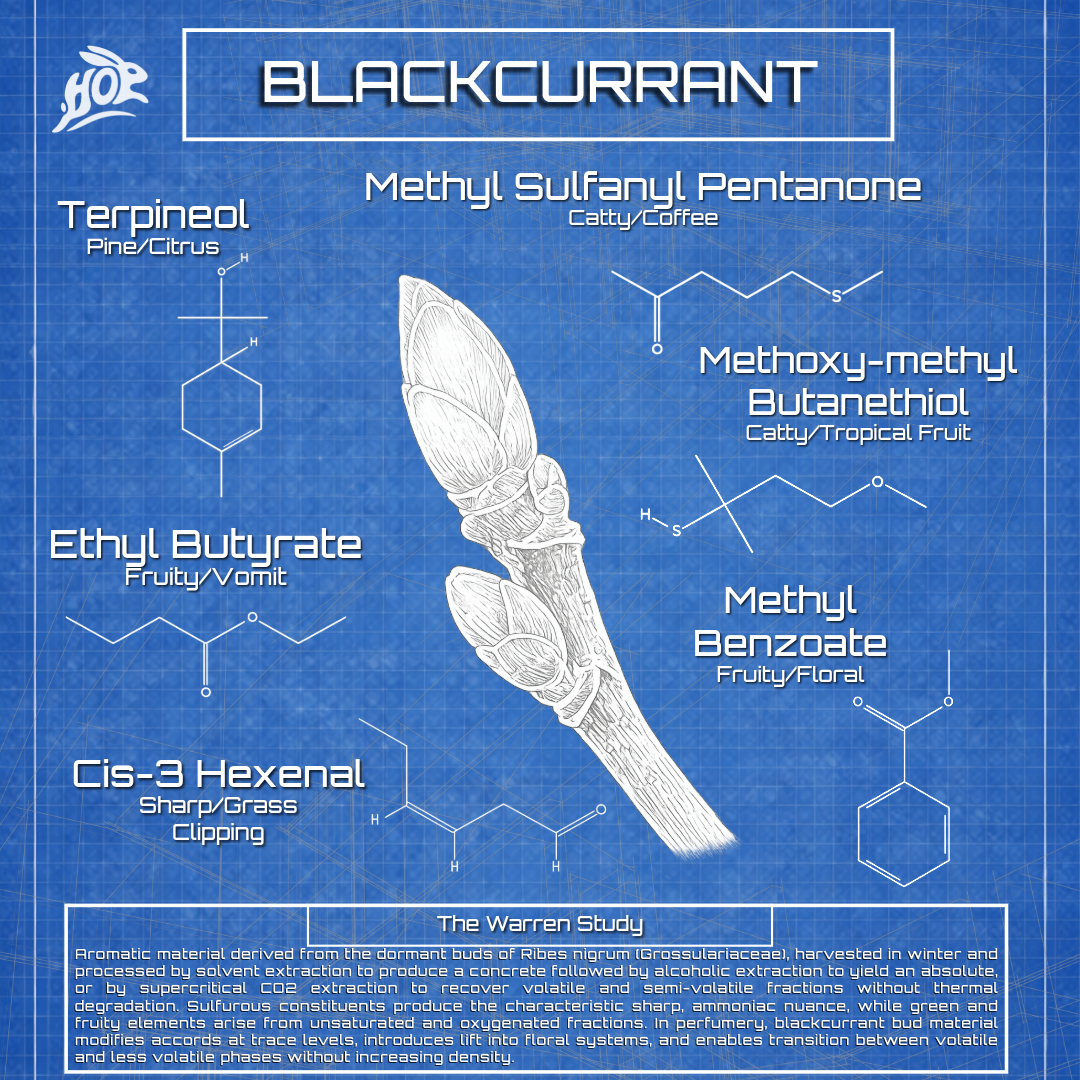
Blackcurrant Bud; Cassis (Ribes nigrum L.)
What do cat pee and blackcurrant have in common?
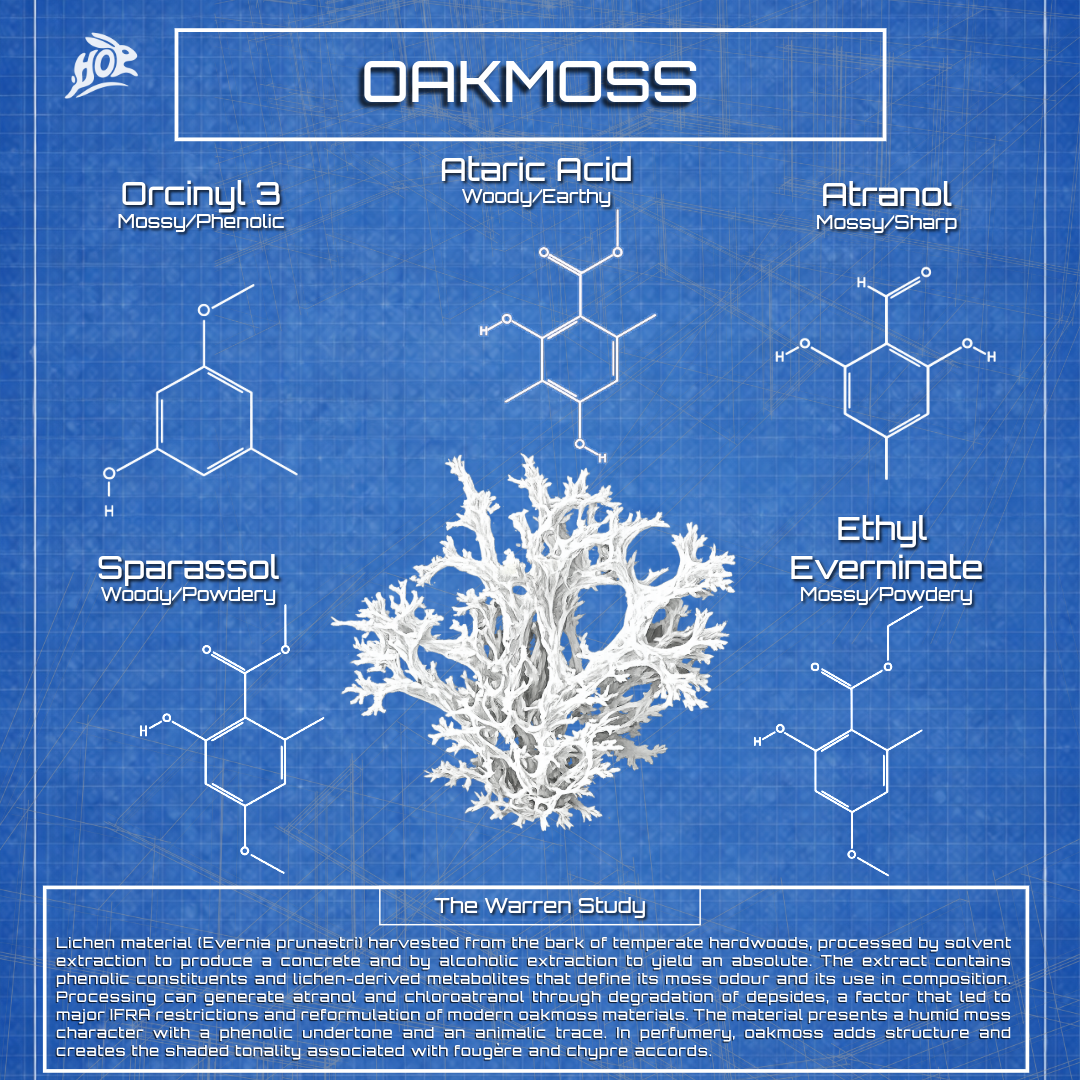
Oakmoss (Evernia prunastri (L.) Ach)
Some materials add character, and then other materials alter structure; oakmoss does both, a lichen extract whose chemistry, restrictions, and replacements tell a larger story about how perfumery evolves.
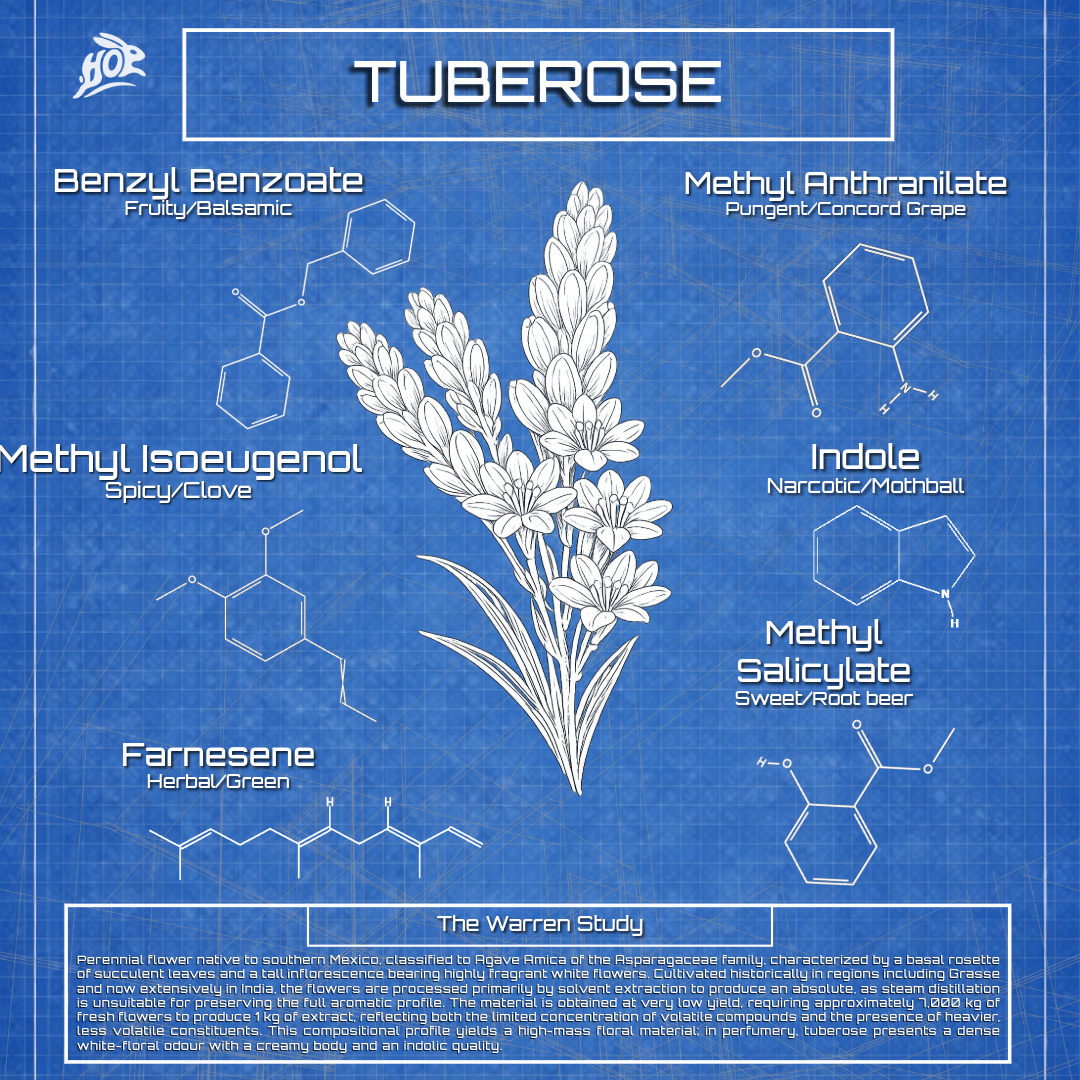
Tuberose
Tuberose was the star of perfumery in the 80s. A flower so narcotic, perfumes using it were banned in restaurants, which only gave it more notoriety. The tiny white flower itself can fill a room with its scent for days.
Here, we explore the history and molecular blueprint for Tuberose and its use in perfumery.
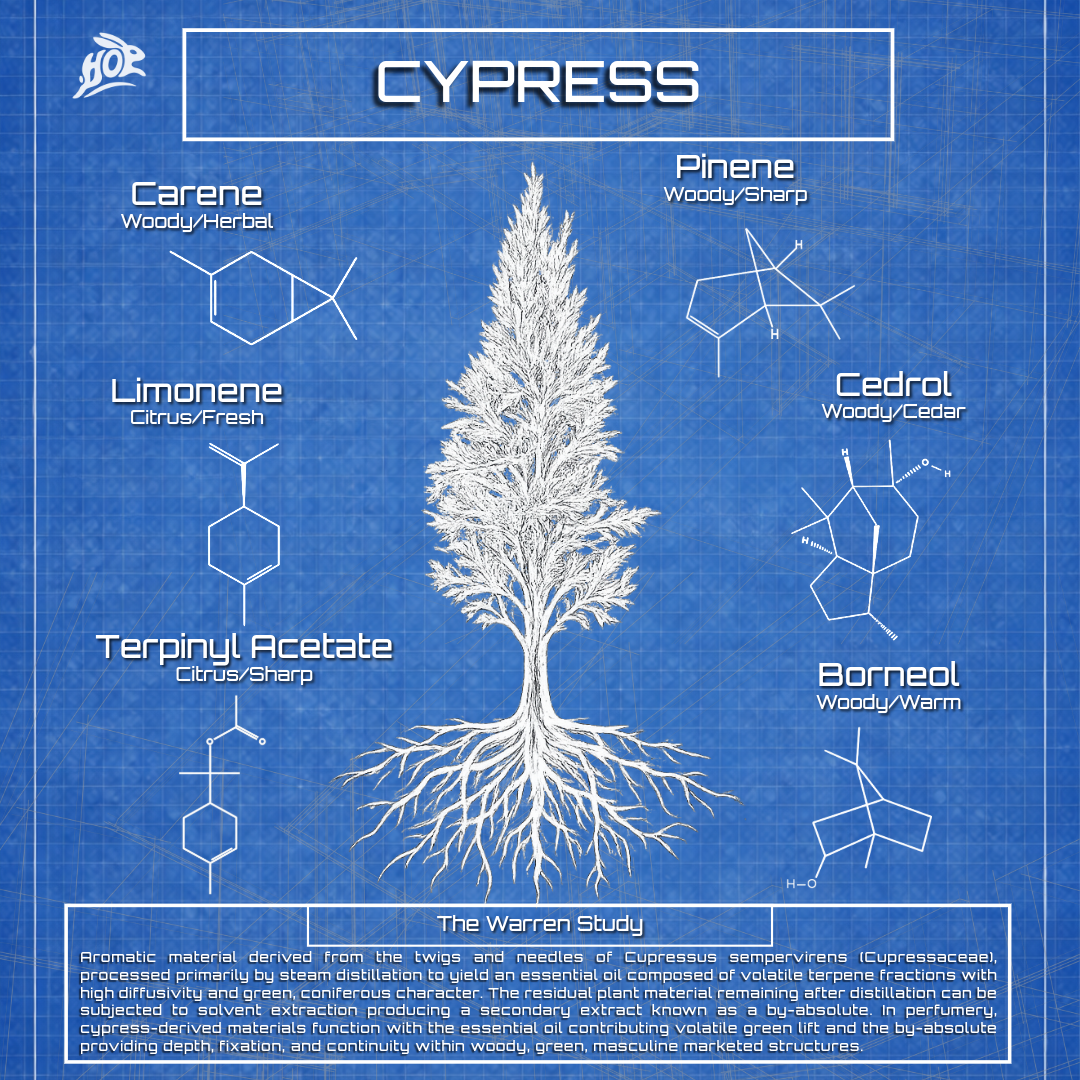
Cypress
Born in the Permian period millions of years ago, Cypress can grow over 65 feet tall and live for over 500 years. A dual symbol of both immortality for their own longevity, and that of mourning and the afterlife. It’s said that Cyparissus was turned into a cypress tree by Apollo after begging that his grief for his pet stag might last forever. Perfumers reach for the Oil or absolute to give an ozonic, woody freshness to blends.
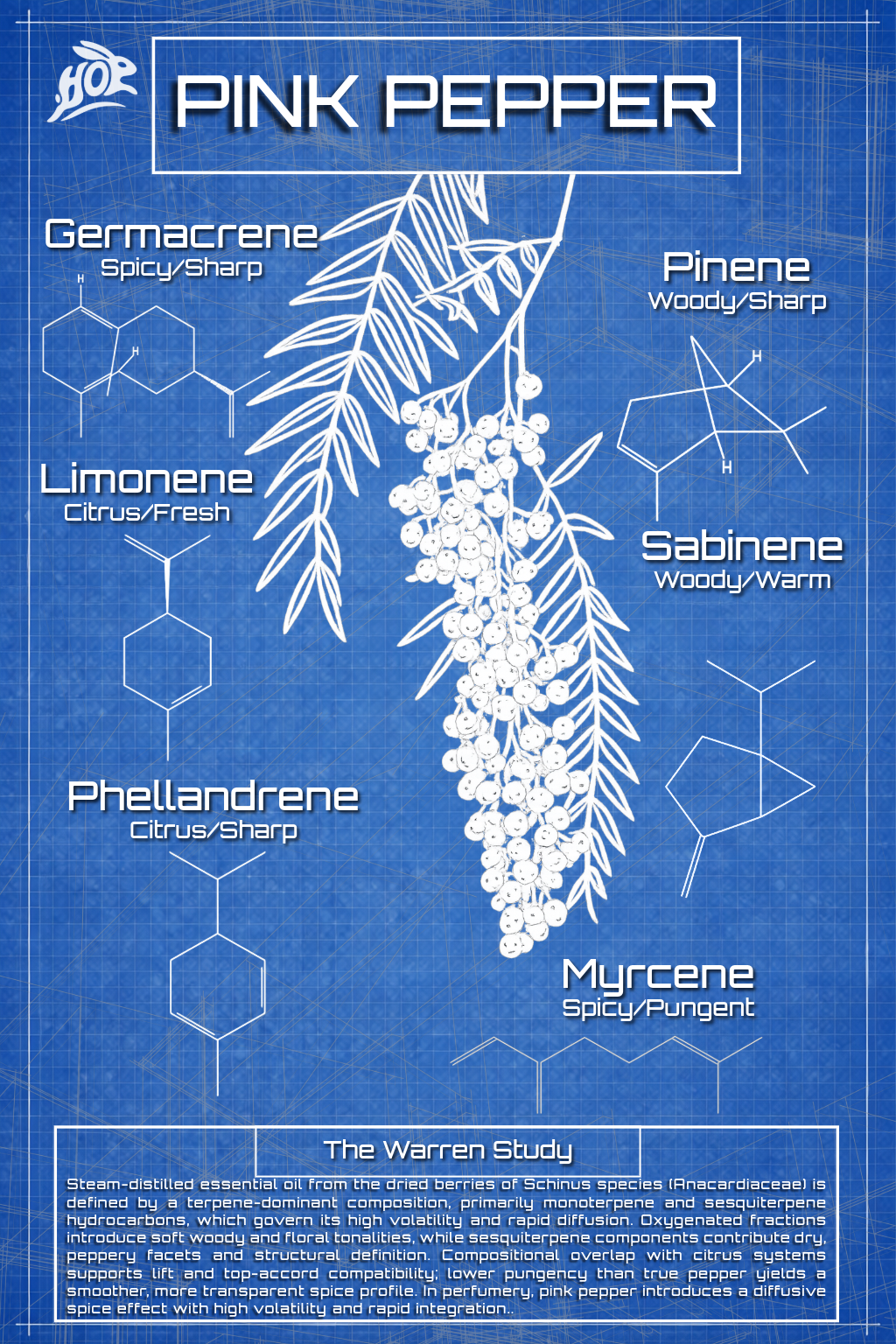
Pink Pepper
Pink pepper comes from Schinus molle and Schinus terebinthifolius, South American trees whose berries carry a bright, terpene-rich volatility which makes their scent profile closer to citrus than to true pepper (Piper nigrum).
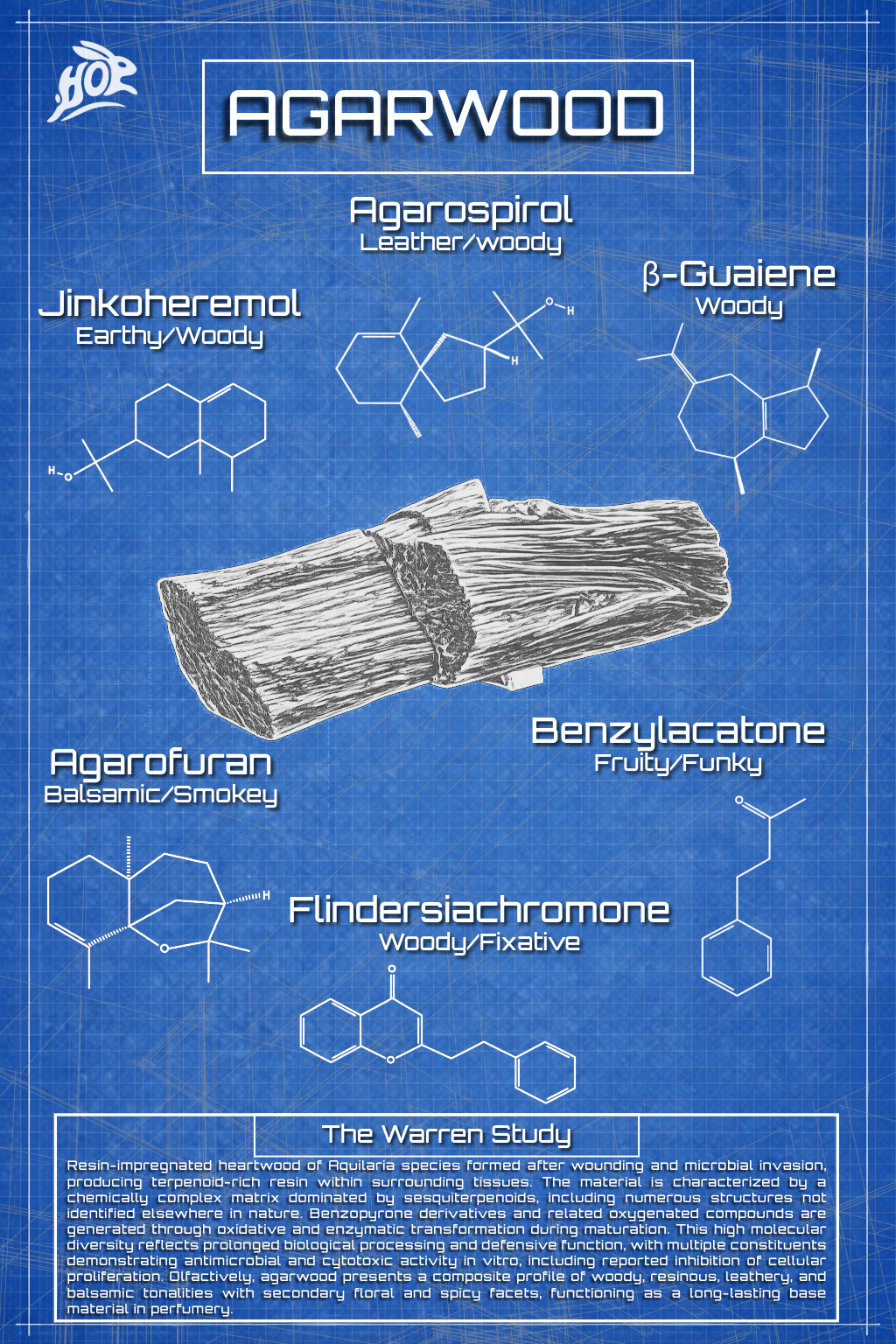
Agarwood/Oud
Agarwood or Oud is one of the rarest and most expensive raw materials on the planet. But how much do you really know about the tree beyond the fluff marketing that’s just selling FOMO? Let’s dive into some of the lesser-known points and what actually makes it smell the way it does.
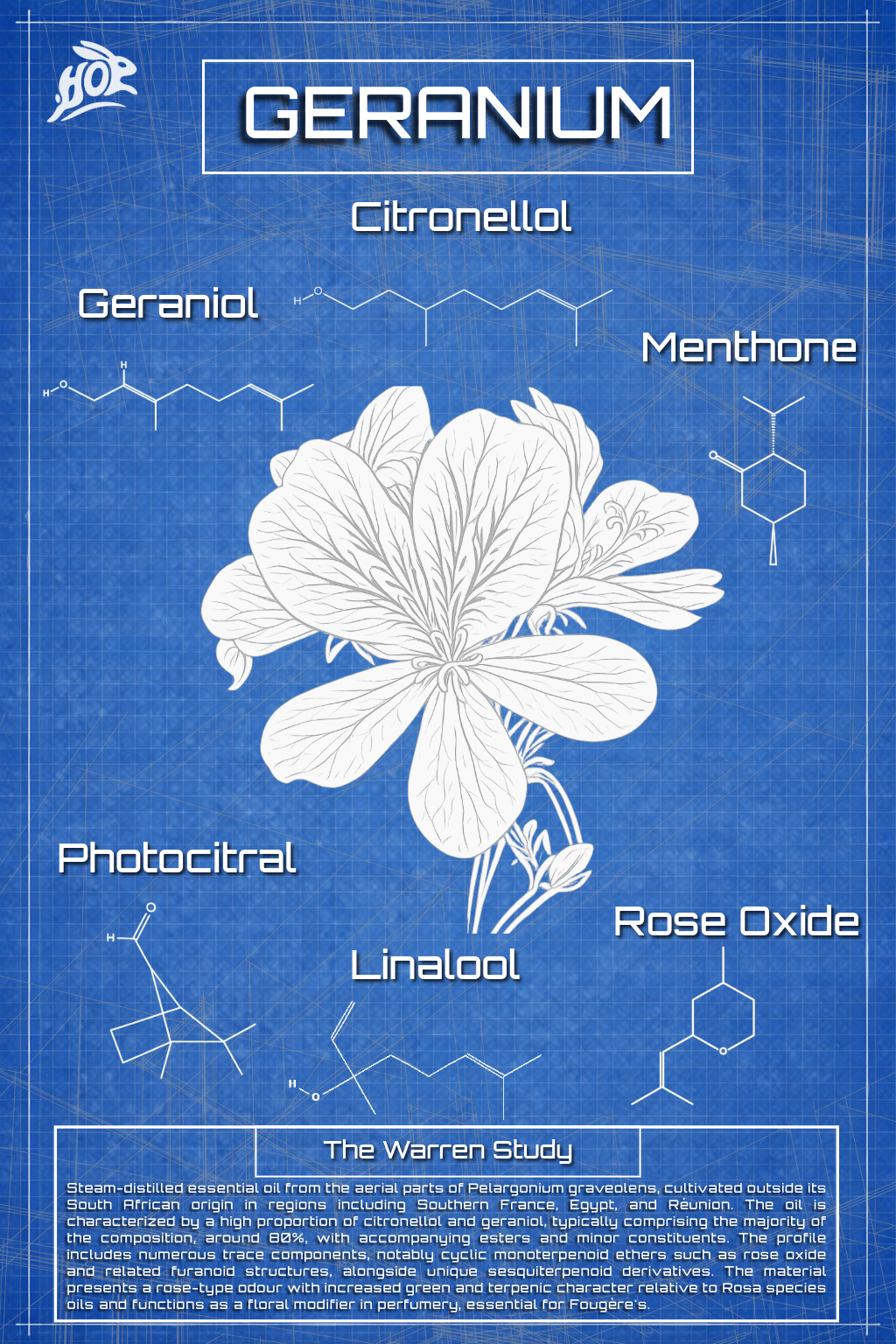
Geranium Blueprint
The molecular blueprint of Geranium and its use in perfumery