

Tuberose
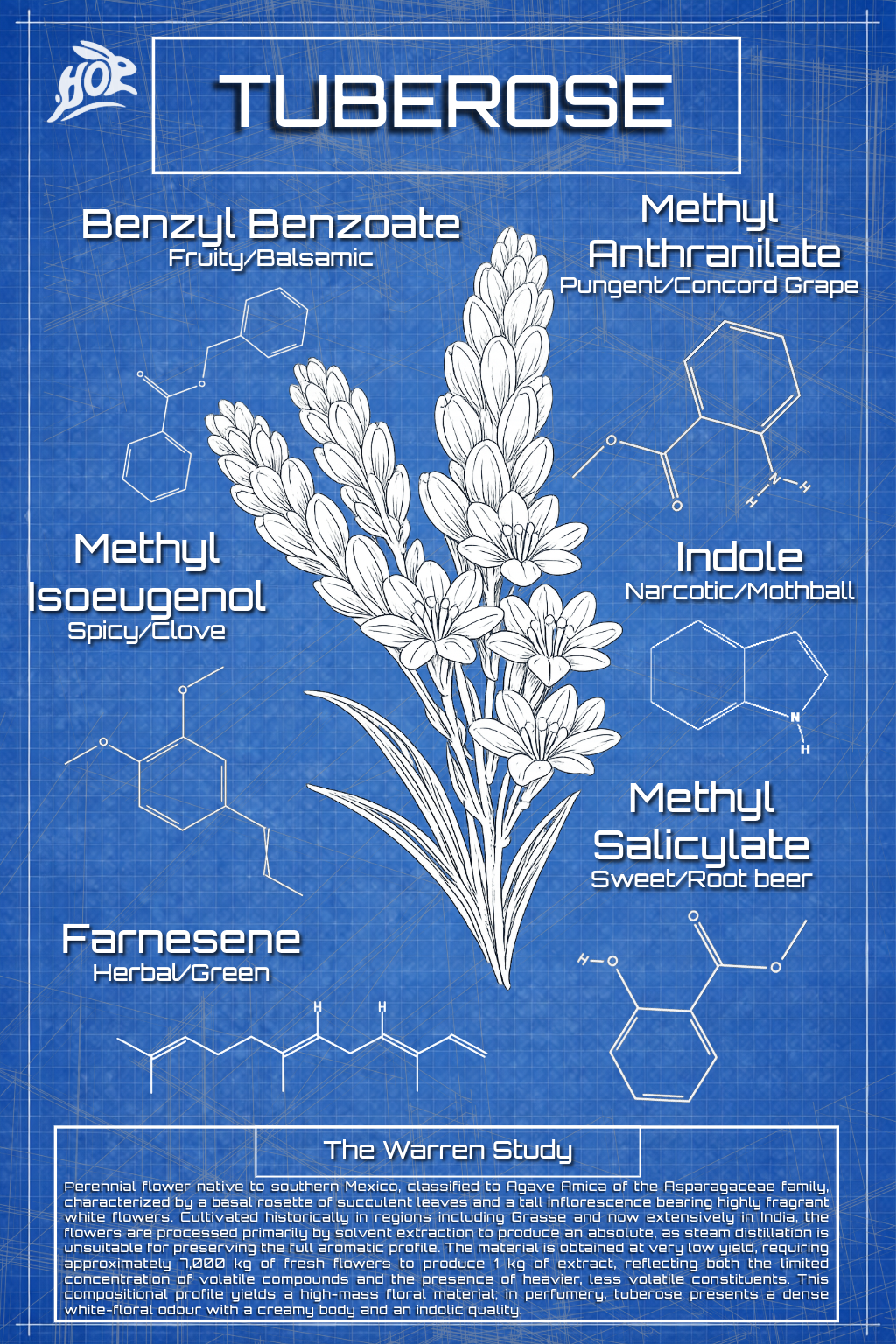
Bone flowers (omixochitl) adorn the caskets of the dead in Mexico, where they have been cultivated since the Aztec Empire, if not before, and made their way to France via traveling Monks in the 1600s. In Grasse, they became known as Tubéreuse, where they established themselves as a local favorite with their Jekyll & Hyde-like fragrant flip between a nectar-filled freshness of the day, and a sensual, narcotic bloom when the sun goes down.
Tuberose, like other white flowers, is loaded with Benzenoids to attract its main pollinator, the Hawk Moth, which looks like a hummingbird from a distance. Salicylates are benzenoids that plants synthesize as defense mechanisms against biopathogens, which cause tissue damage. Methyl Salicylate is an important molecule to note here due to its medical significance. It's directly related to the same molecule of Aspirin, which is what it metabolizes to in the bloodstream, causing risk of overdose if ingested.