Coconut- Cocos nucifera
Almond Joy ranks 10th in candy bar brand awareness and consumer share according to Statista. Lower than Butterfinger, 3 Musketeers, and even Crunch Bar. So what does this have to do with perfumery? Flavor and fragrance go hand in hand with most foods’ “flavor” profile, coming directly from retinonasal scent.
Coconut polarizes.
You may love it.
You may hate it.
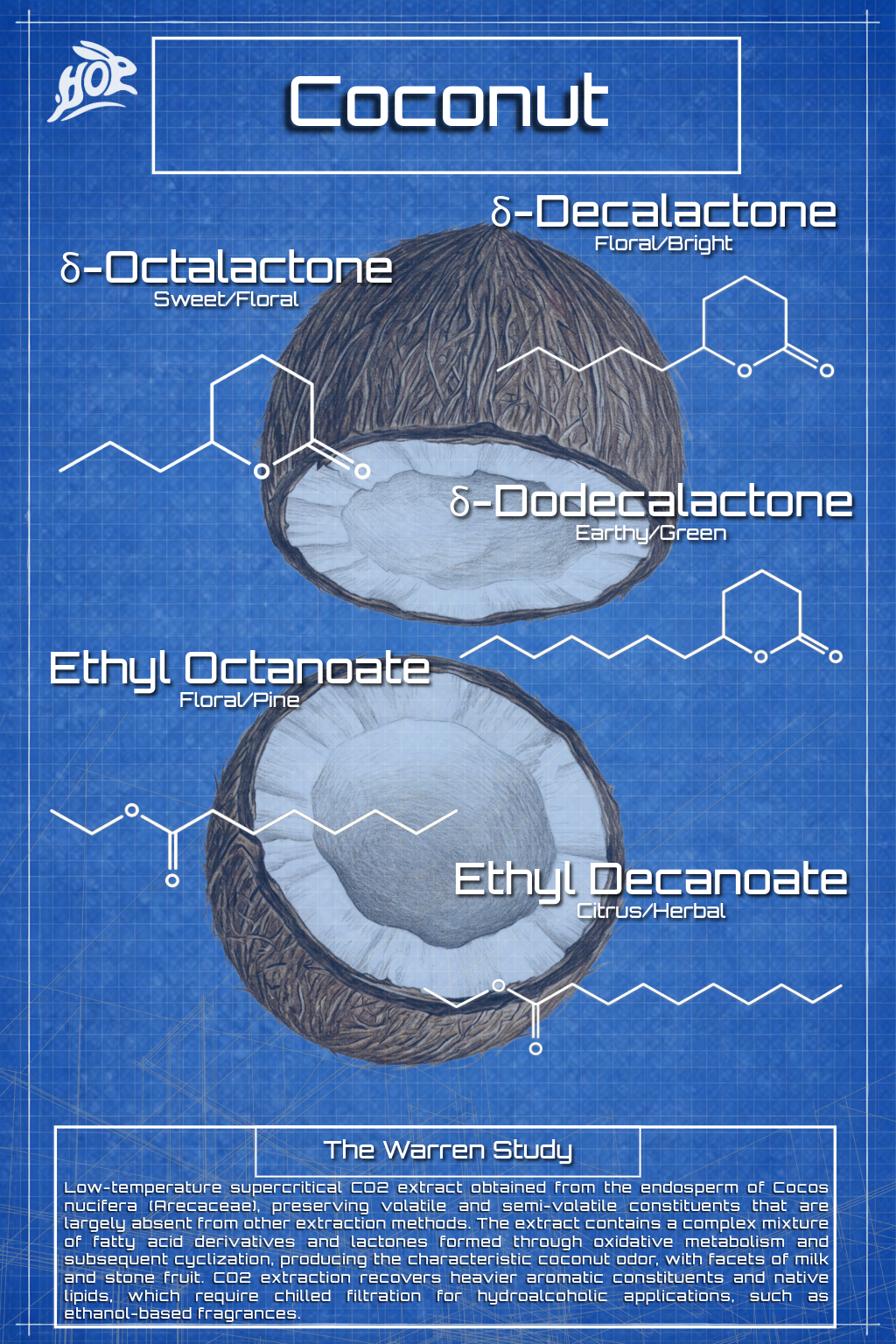
Coconut, as a natural raw material, is rarely used in perfumery. While oils do exist, they are high in medium-chain triglycerides, which are great for carrier oils; however, they don’t carry many of the volatile molecules one might recognize as “coconutty”, and those triglycerides don’t blend well with ethanol. What we want in perfumery are the cyclic esters known as lactones, produced in coconuts when the fruit’s fatty acids and alcohols metabolize through oxidation.
To obtain the full spectrum of volatile organic compounds desired in a Coconut extract for perfumery, CO2 extraction is required, resulting in a byproduct consistency similar to the Coconut cooking oil you might find at your local supermarket, while smelling of a lactonic tropical confectioner, the cooking oil lacks. And these CO2 extracts aren’t cheap to produce, costing anywhere from $2 to $20 a gram. Many of the lactones can be synthetically created for pennies on the dollar, or even isolated naturally from fruits like peaches and apricots, or even as an upcycling of would-be dairy waste, where these lactones can also be found in nature. These molecules are the ones most often used in commercial perfumery.
Let’s dive into what makes up the olfactive aggregate in the blueprint.