

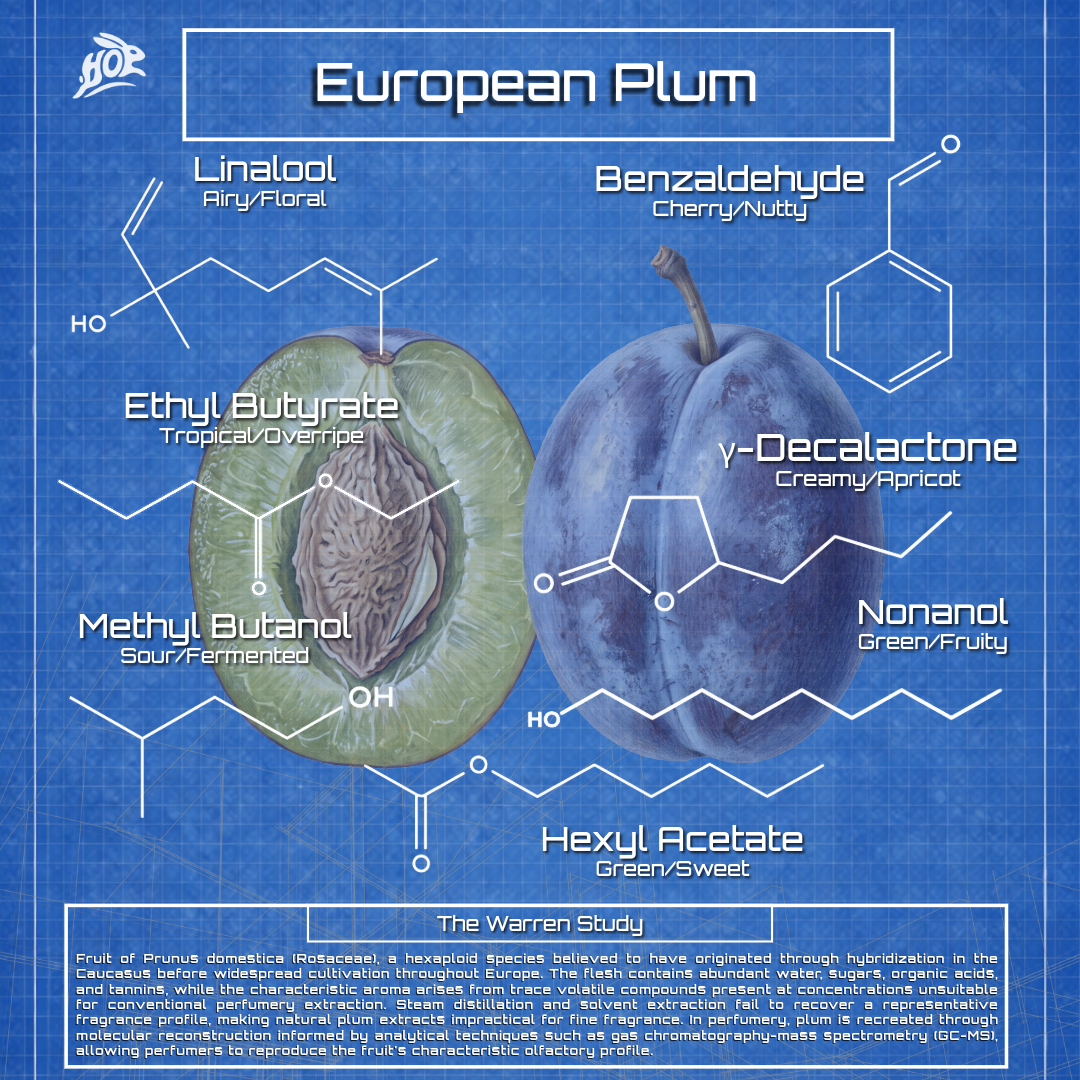
Asian and European Plum: Prunus
Why doesn't plum have an essential oil? Explore the chemistry of European (Prunus domestica) and Chinese (Prunus salicina) plums, discover why their aroma cannot be captured through conventional extraction, and learn how GC-MS analysis, aroma chemistry, and molecular reconstruction allow perfumers to recreate one of fine fragrance's most recognizable fruit accords from an otherwise unextractable fruit.
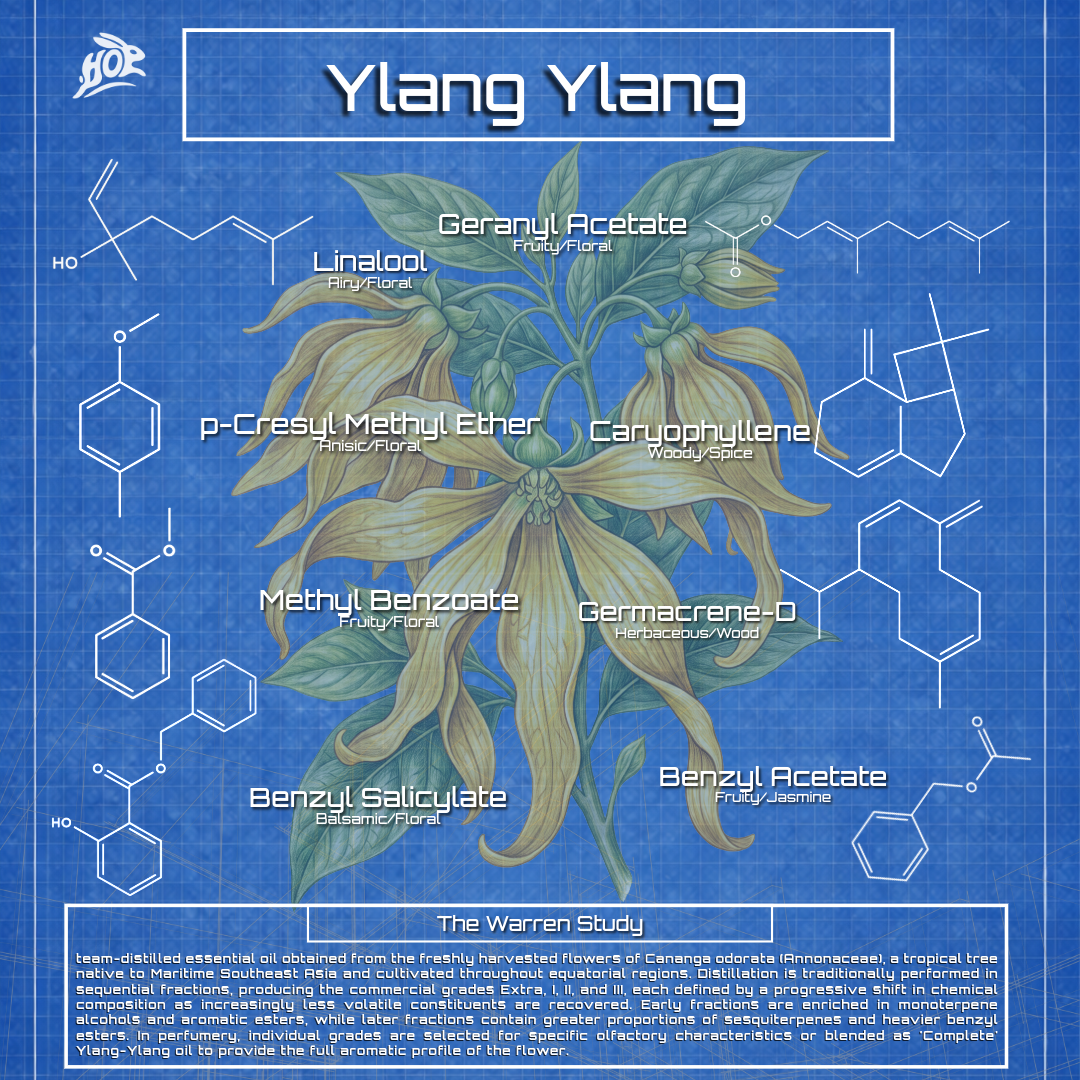
Ylang-Ylang — Cananga odorata
Why does Ylang-Ylang come in different grades? Explore the science of Cananga odorata, from magnoliid botany and steam distillation to the chemistry behind Extra, Grades I, II, III, and Complete oils. Discover how the molecular fingerprint shifts throughout distillation, creating distinct aromatic profiles that have shaped fine perfumery for more than a century.
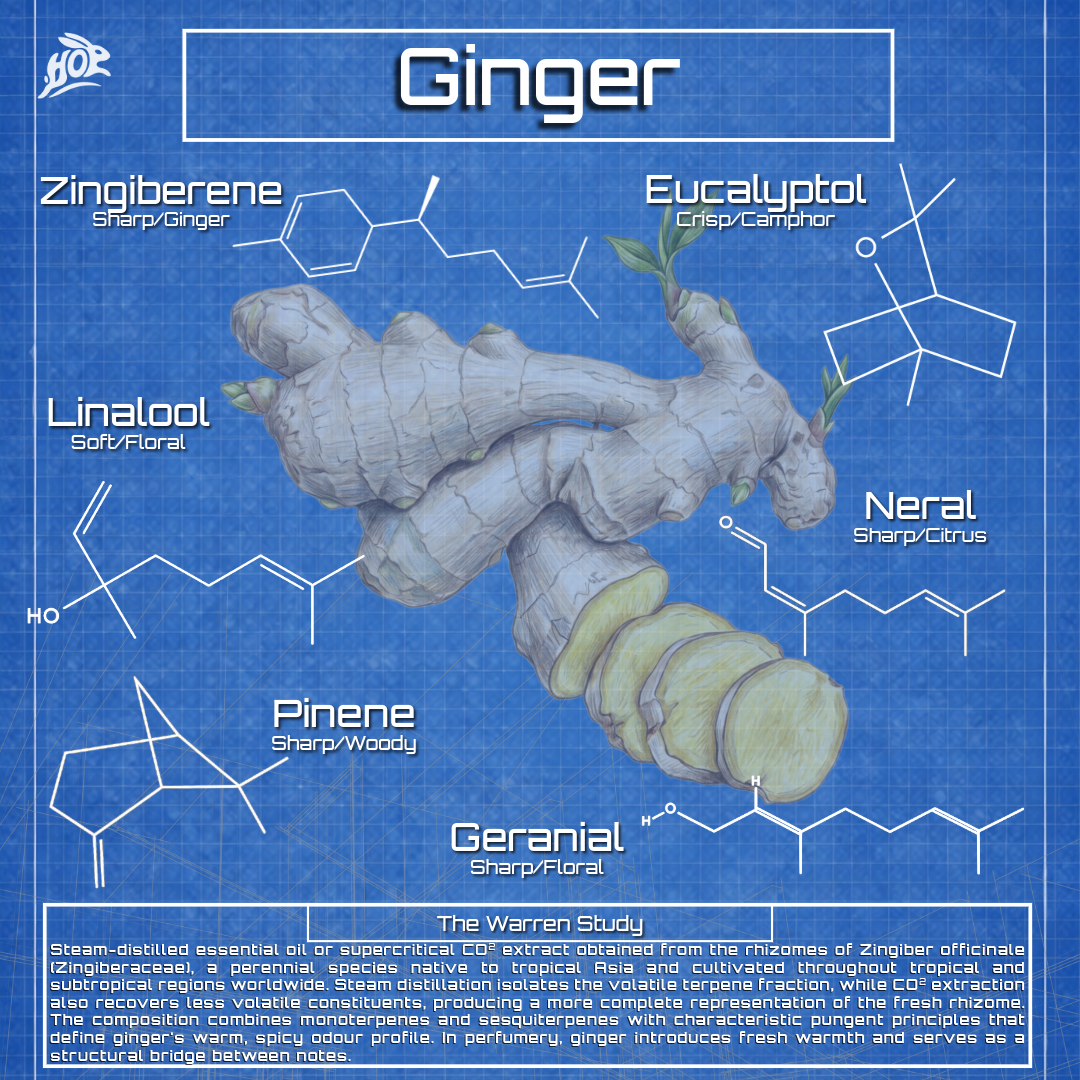
Ginger - Zingiber officinale
What gives ginger its unmistakable aroma? Explore the science of Zingiber officinale, including rhizome biology, essential oil production, CO₂ extraction, major aroma compounds, and why ginger remains one of perfumery's most important spice materials.
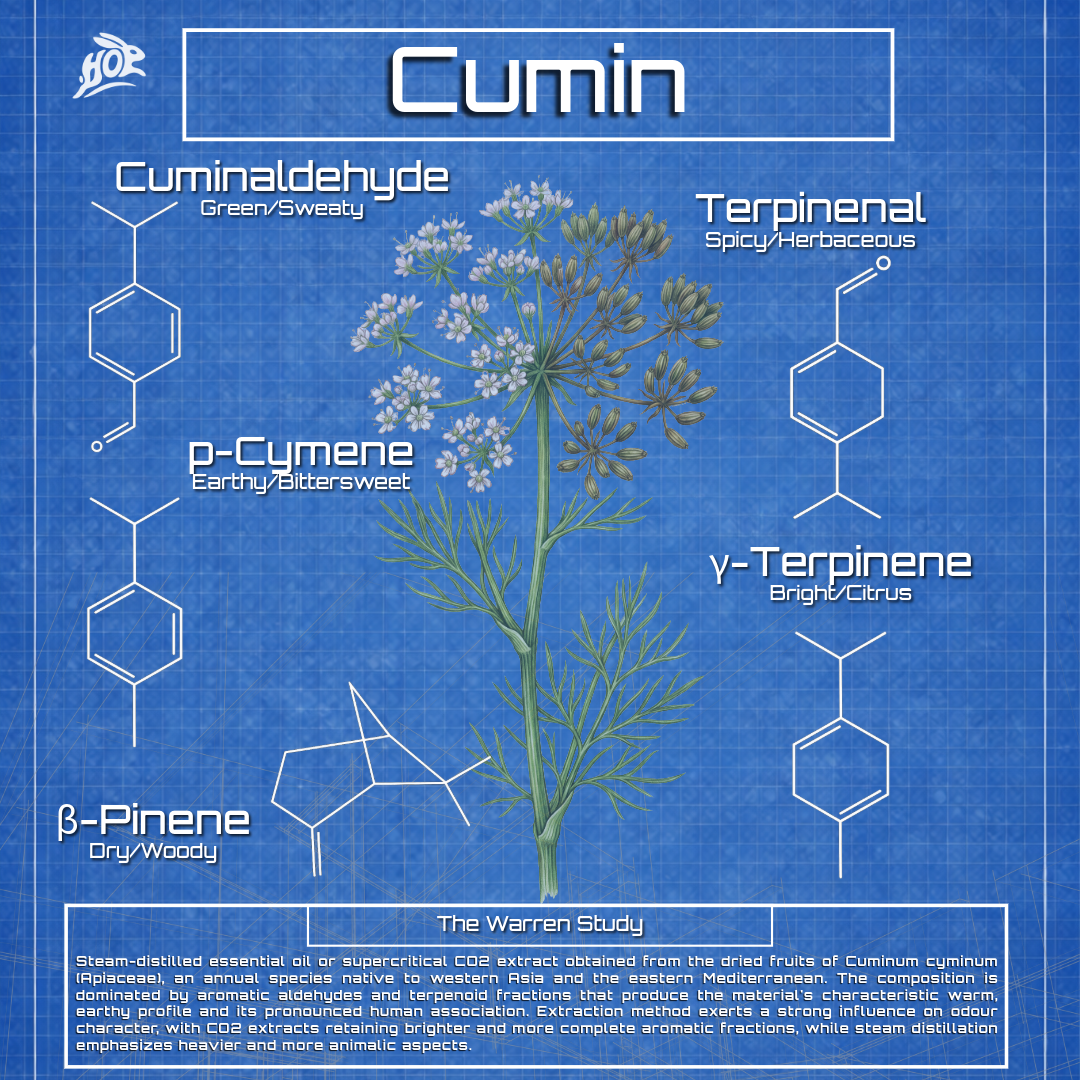
Cumin- Cuminum Cyminum
Cumin may be the most celebrated seed in the Apiaceae family, prized for thousands of years in cuisine, medicine, and perfumery. Explore the chemistry of Cuminum cyminum, from essential oil and CO₂ extraction to cuminaldehyde and its role in modern muguet accords, animalic effects, and the warm, human character that master perfumers use under restraint.
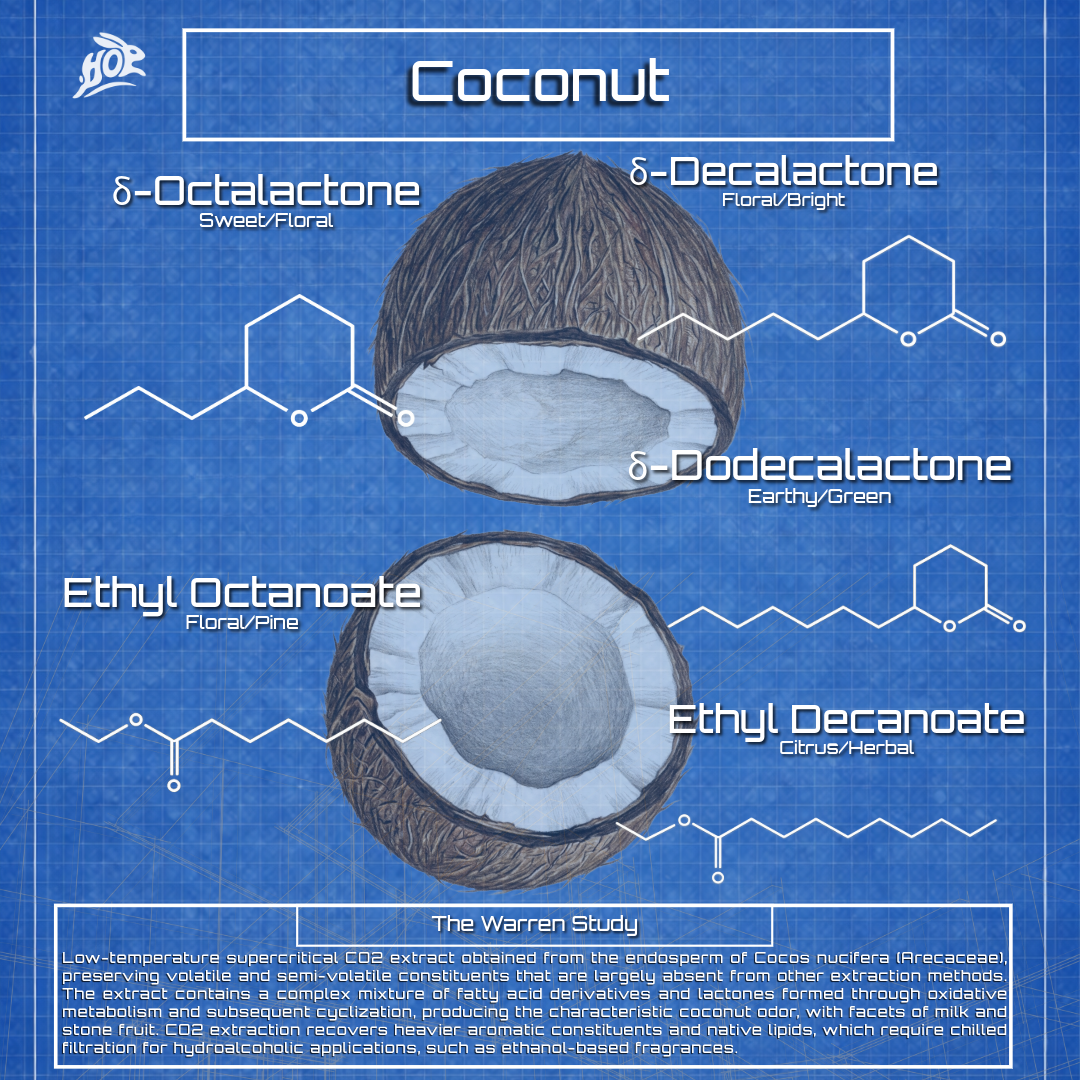
Coconut- Cocos nucifera
Coconut in perfumery is far more than the fruit itself. The creamy aroma comes from lactones formed as coconut fatty acids oxidize and cyclize, while modern CO₂ extraction preserves aromatic compounds that steam distillation leaves behind. Explore the chemistry, extraction, and perfumery use of Cocos nucifera, and discover why natural coconut remains one of fragrance's most misunderstood materials.
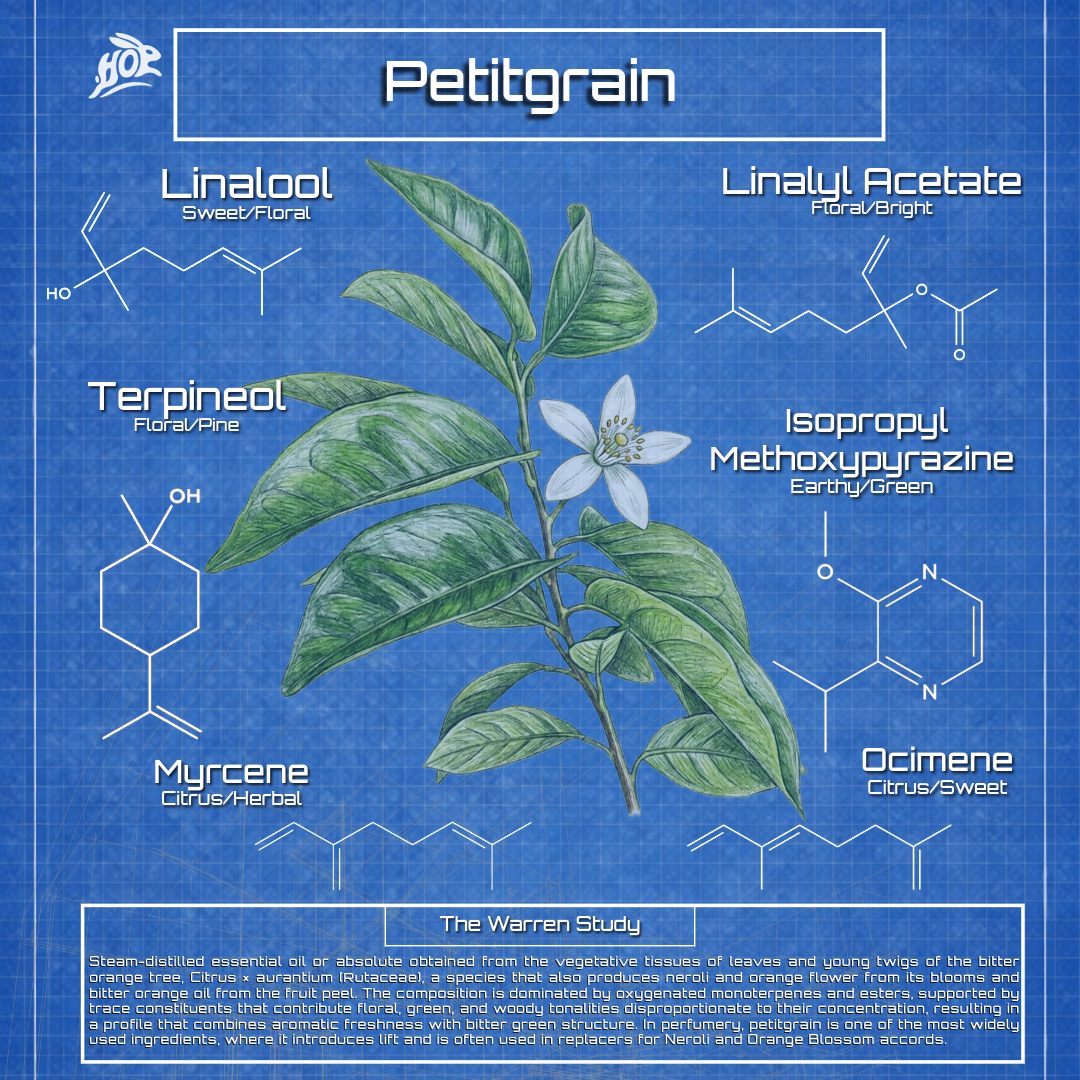
Petigrain- Bigaradier, Bitter Orange Tree; Citrus x aurantium
The bitter orange tree gives perfumery four distinct materials: bitter orange from the peel, neroli and orange blossom from the flower, and petitgrain from the leaves and young twigs. Often overshadowed by its more famous relatives, petitgrain occupies the space between citrus and green aromatics, carrying a chemistry that has shaped colognes, fougères, and floral compositions for centuries. Explore the extraction, chemistry, and perfumery use of Citrus × aurantium's most overlooked material.
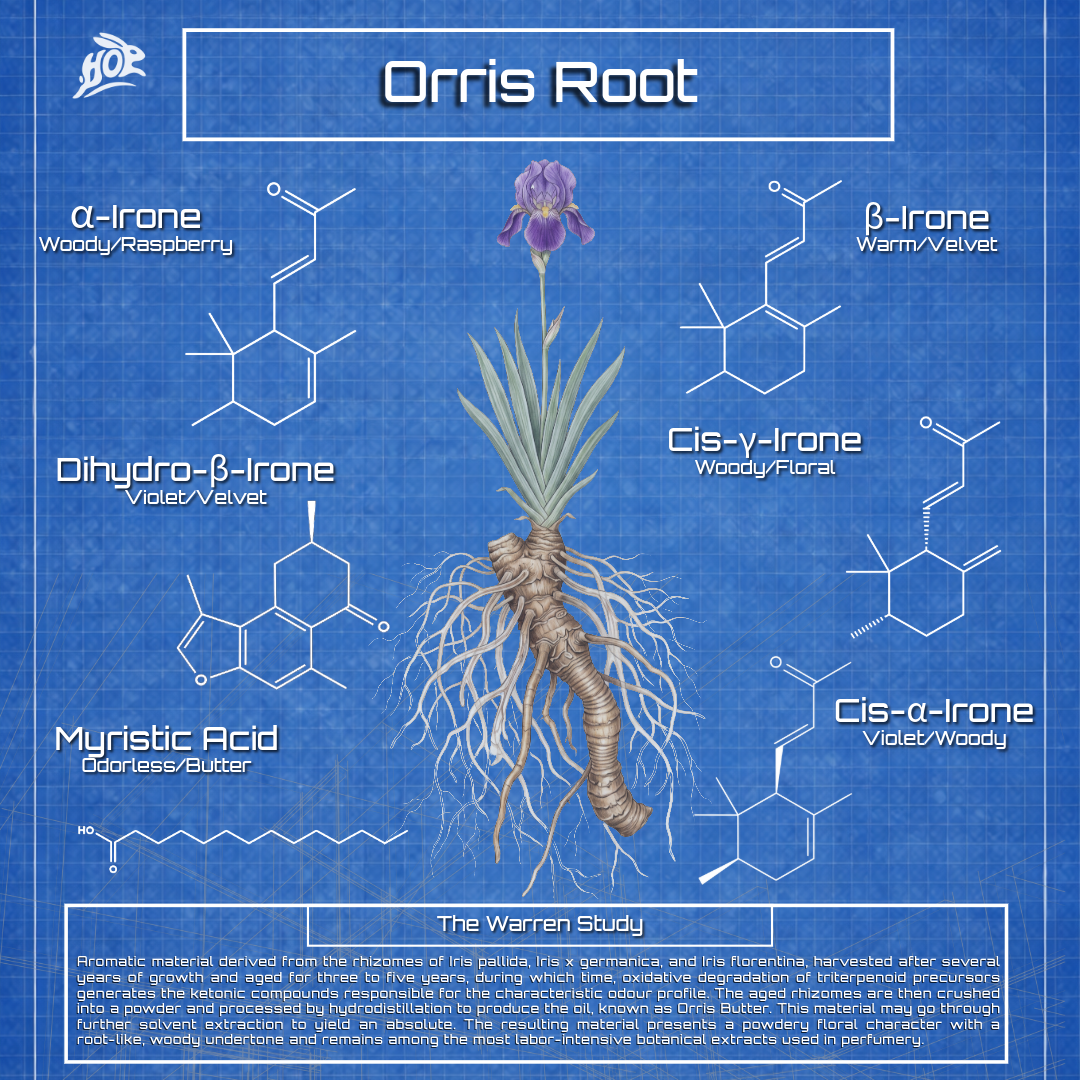
Orris Root (Iris)
Most people admire the iris for its flower, yet perfumery values the rhizome hidden beneath the soil. Harvested from Iris pallida, Iris germanica, and Iris florentina, orris requires years of maturation before extraction develops the scent profile that made it one of perfumery's most prized botanical materials. Explore the science, cultivation, and chemistry behind the material known as orris root with the Blueprint here.