

Mint- Lamiaceae Mentha
Lamiaceae is one of the most significant culinary families on the planet, consisting of lavender, rosemary, sage, oregano, thyme, basil, lemon balm, and, of course, mint. Thriving in the limestone-rich terroir of the Mediterranean basin, these plants are now harvested worldwide as kitchen staples, filling spaces in gardens, patios, and window planters, where they release their scents into the spaces they surround.
Mint itself is in the genus Mentha, with somewhere between 13 and 42 different species and variants, due to mint’s ability to easily hybridize. Field Mint (arvensis) and Spearmint (spicata) are the two main parents for most of these species, including Peppermint(x piperita). Peppermint and Spearmint are the two you find most commonly used in perfumery.
Here in the Pacific Northwest, some of the finest mints are grown for the food and perfumery industry. Not 20 miles north and south of me, you’ll find the fields that supply the same mint found in fragrances like Eau de Minthé and L’Eau Papier. I grow many cultivars in my own backyard.
Mint is also responsible for many of your mushroom notes in perfumery. How, you might ask? Octanol naturally occurs at trace levels in the plant, though not enough to impact the flavor or fragrance profile of mint itself. Octanol can be isolated and extracted due to the mint’s rapid growth and reproduction rates.
Here are blueprints for both Peppermint and Spearmint, with a deeper dive down the rabbit hole in the Warren Study.
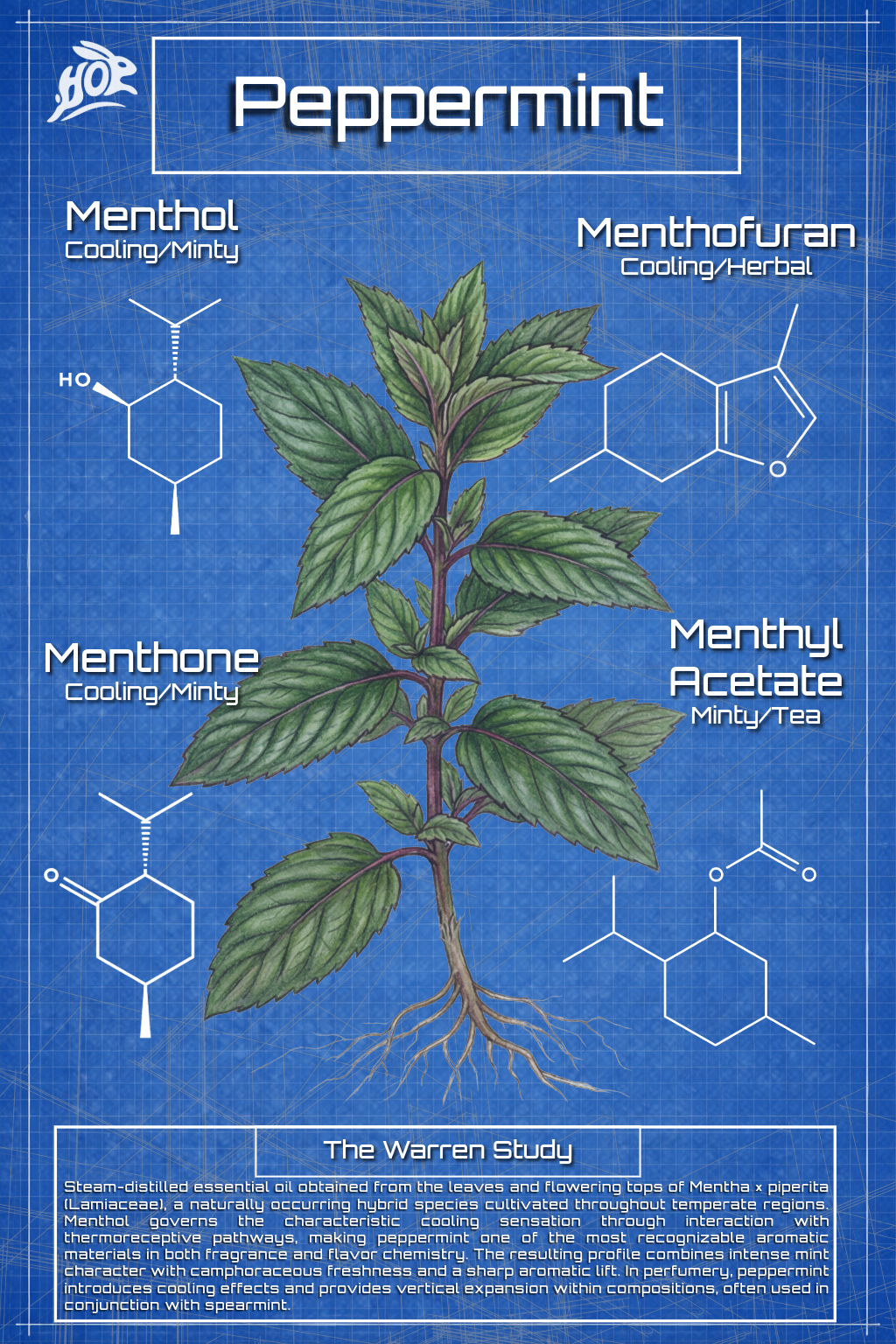
Mentha piperita
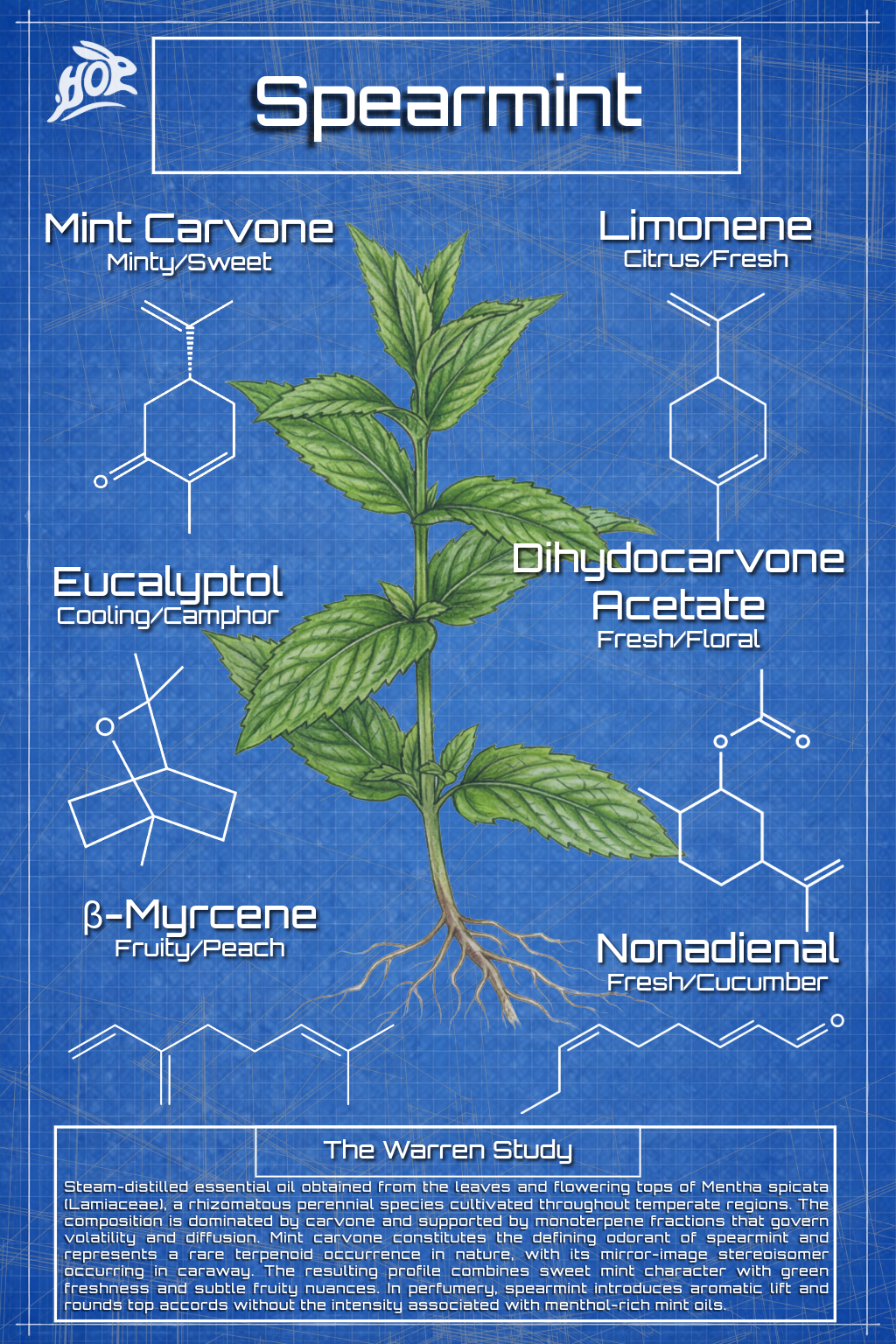
Mentha spicata