Cumin- Cuminum Cyminum
Cumin may just be the most popular of all the Apiaceae family. A spice used to mummify Egyptian sovereignty. Used culinarily around the world to add warmth to dishes like Indian curries, Tacos al Pastor, Brazilian Feijoada, and even Spanish cured pork Chorizo, or Middle Eastern and African favorites: Shakshuka, Lamb Kababs, or the slow-cooked stews of Morocco called Tagine. Cumin is well-loved. As I mentioned, it could be the most popular of all the Apiaceae family.
Apiaceae is a family of plants with a crown-like cluster of flowers called an umbel, which grows on a long, strong stalk. Seeds and roots are favorites from the family, giving us Coriander (seed, or cilantro as a leaf), Caraway, Fennel, Dill, Parsley, Parsnip, Carrots, Galbanum, Angelica, and so much more. Hemlock, the plant that killed Socrates, is also a member of this family. This is an important family here in Oregon, as larval host plants for the Anise Swallowtail butterflies, native to the Willamette Valley region where I live.
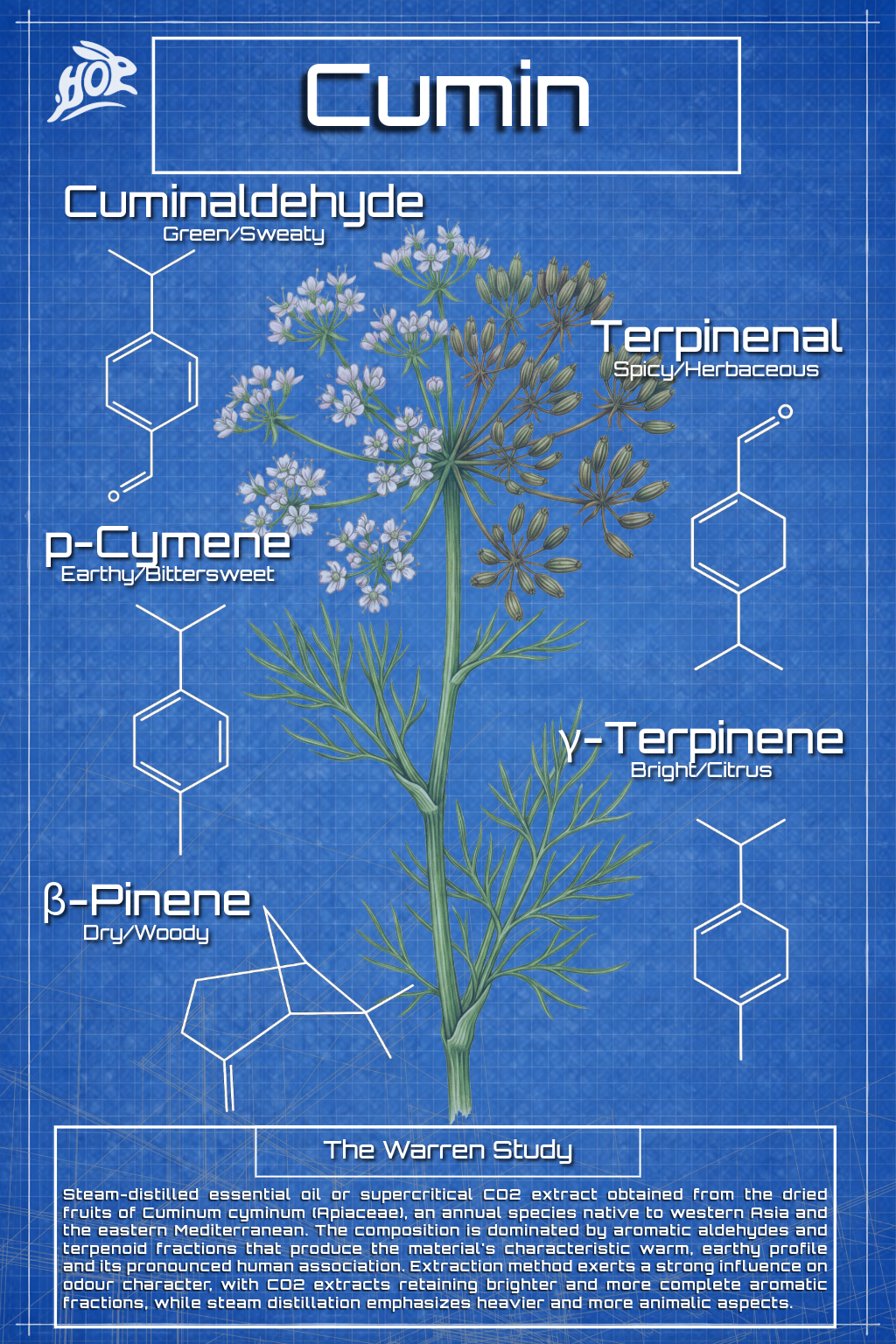
With cumin, it’s the seed we want. Crushed or used whole for cookery—In perfumery, the seeds are first dried before being cryogenically ground, a process that uses liquid nitrogen to prevent overheating, which would cause a loss of valuable volatiles. Steam distilled, they’ll produce an essential oil that is dark, dank, and very much reminiscent of a post-session CrossFit gym with no A/C on a late July afternoon in McAllen, Texas. A CO2 extraction is also available and much preferred by master perfumers for its brighter, nuttier nuance that still imparts a scent of the human animal. Both extracts are used sparingly. Well under 1% of compound formulas. Just as the good chef knows, more isn’t always better and can ruin a dish. Sometimes it’s that pinch of spice that brings the whole experience into harmony.
Cumin is also important for creating Lily-of-the-Valley accords. How? With molecular distillation, chemists can isolate Cuminaldehyde, which is then processed through total hydrogenation, creating Mayol®, a popular muguet aroma chemical perfumers have been reaching for more and more with the ban on lyral.