Blackcurrant Bud; Cassis (Ribes nigrum L.)
What do Cat Pee and blackcurrant have in common?
More than you might think, and we will get to that. First, though, let’s take a little trip back in time to Burgundy, France, 1879, a year that saw the region’s grape industry decimated by a nasty little insect called the Daktulosphaira vitifoliae. At the same time, the fruit of the Ribes nigrum shrub, which is native to cooler northern hemisphere climates, was becoming widely popular in culinary dishes. This led to a boom in sales of Crème de Cassis, made of the blackcurrant fruit.
The fruit has since become a cornerstone for French, Spanish, and English gardens and cuisine. During WWII, due to citrus shortages, the British government even encouraged citizens to grow blackcurrants in their gardens for their high vitamin C content.
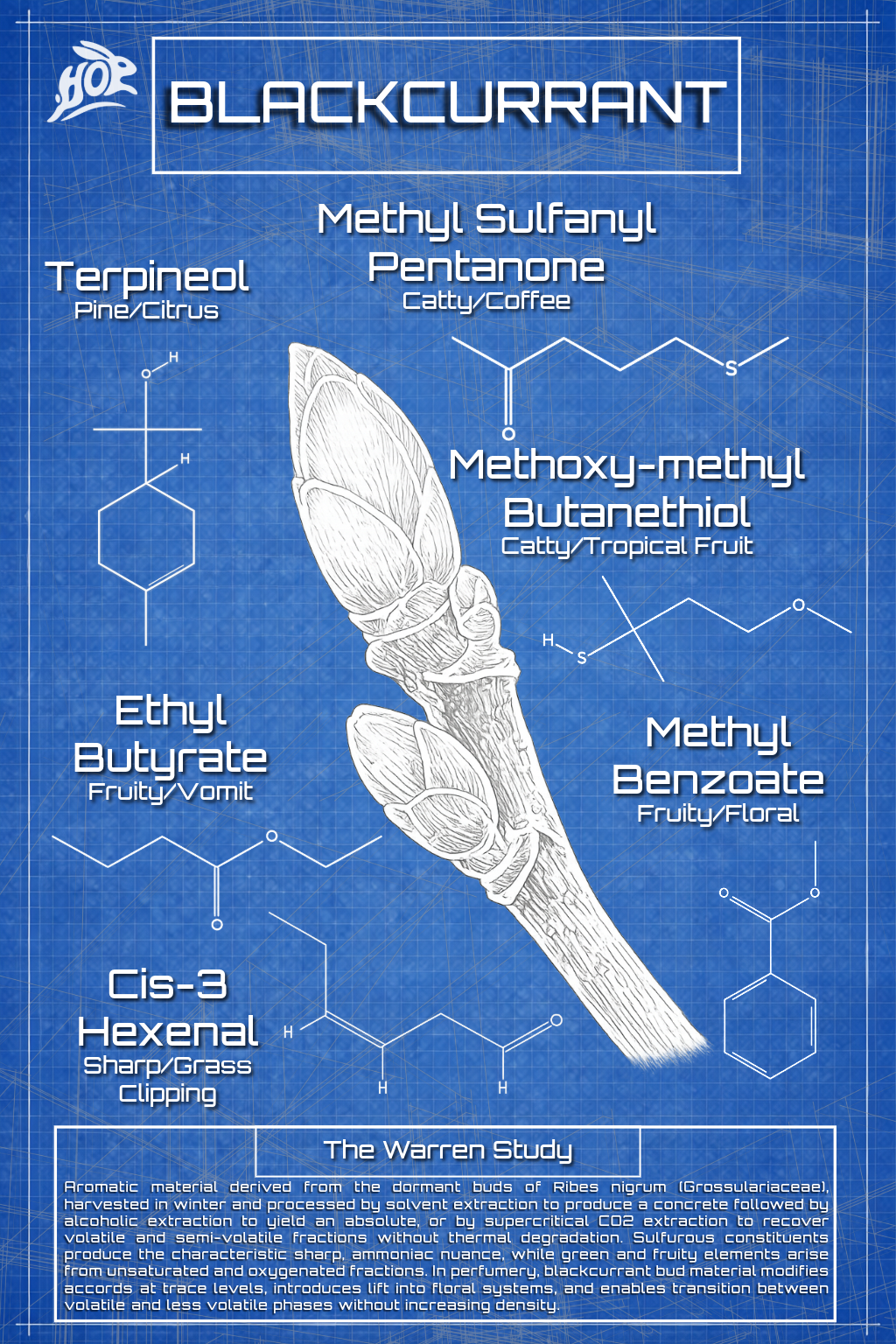
First used in Perfumery by Guerlain in 1969’s Chamade, it wasn’t the fruit itself being used. The emerging buds are harvested in January, and it takes at least 35 kilos of these buds and 180 hours of strenuous labor to produce just one kilogram of absolute. This absolute is known for its powerful fruity notes and a sulfurous nuance of cat pee, which comes from a molecule dubbed the “Cat Ketone” (methyl sulfanyl pentanone). Firmenich chemists isolated volatiles directly from cat urine, and some of them(including “Cat Ketone”) are used as flavor additives in the food industry, giving off hints of blackcurrant, mango, hops, and Sauvignon Blanc (all of which it is naturally found in).
It’s a great reminder of how connected we all are. Animals and plants produce an array of molecules, many of which are shared as building blocks of life and communication. Cats mark to let other cats know who they are, and the same goes for plants that release these volatiles, where insects and animals will pollinate their flowers and disperse their seeds.
What else makes up the smell of Blackcurrant? Here is your blueprint.