Pink Pepper
Cerro Baúl, Peru, is home to one of the oldest breweries known to man, where, around 600 BCE, evidence suggests they brewed hundreds of gallons of Chicha de Molle at a time. An early beer drink that signaled social status among the Andean civilization, it was made using the berries of the Schinus molle tree.
A thousand years later, when Spanish and Portuguese conquistadors first encountered the tree, the plentiful berries reminded them of one of Europe's most prized spices, Pepper, so they brought them back to the Old World and began cultivation in Africa and other parts of the Mediterranean. It's been a culinary staple since, seeing a peak popularity in the 80s before being briefly banned by the FDA.
In perfumery, this is about the time it found its place as perfumers began searching for new top-note naturals that complement citrus components while adding lift, not volume. And pink pepper checked off a lot of the boxes needed.
Jean-Claude Ellena reached for it in Terre d'Hermes. Though the note is primarily used in feminine-marketed fragrances like Christine Nagel's Lalique White and Si Lolita, or Chanel's Les Exclusif and 28 La Pausa. It's a material that loves to play with others. Especially rose, fruity, and Fougère fragrances.
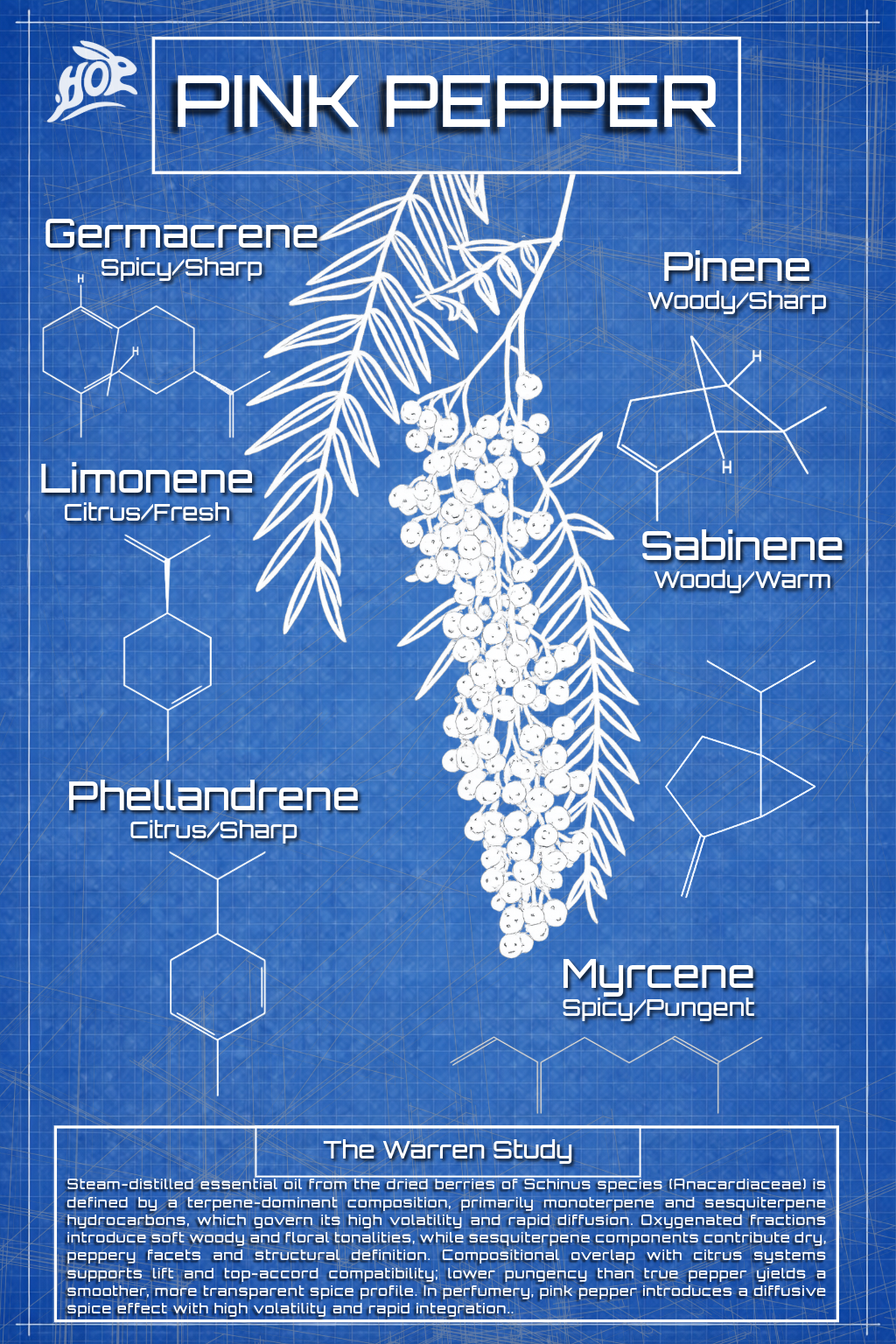
Here are the molecules responsible for Pink Pepper's scent profile.