Ylang-Ylang — Cananga odorata
The name says it all. The Tagalog word ilang-ilang translates to “flower of flowers”. The species name is odorata, which is Latin for “Fragrant, sweet-smelling, or perfumed”. A tree from the Magnoliid clade that makes up around 2% of all flowering plants yet also includes some of the first flowering plants on the planet. Ylang-Ylang has been used for millennia by the islanders of the Philippines, the Moluccas, and Indonesia; where the traditional Kejawen wedding ceremony adorns the bride-to-be’s head with a crown of fragrant roses, jasmine, and ylang-ylang woven into coconut leaves, representing passion, purity, and spiritual grounding as an offering to the ancestors and the divine.
A Manilian sailor named Albertus Schwenger loved the flower so much that he lugged his still over the island in 1860 to produce the first extraction. French monks began sharing it across the Indian and South Pacific Oceans, then ylang gained fame on the world stage in 1878 at the Paris World Exhibition.
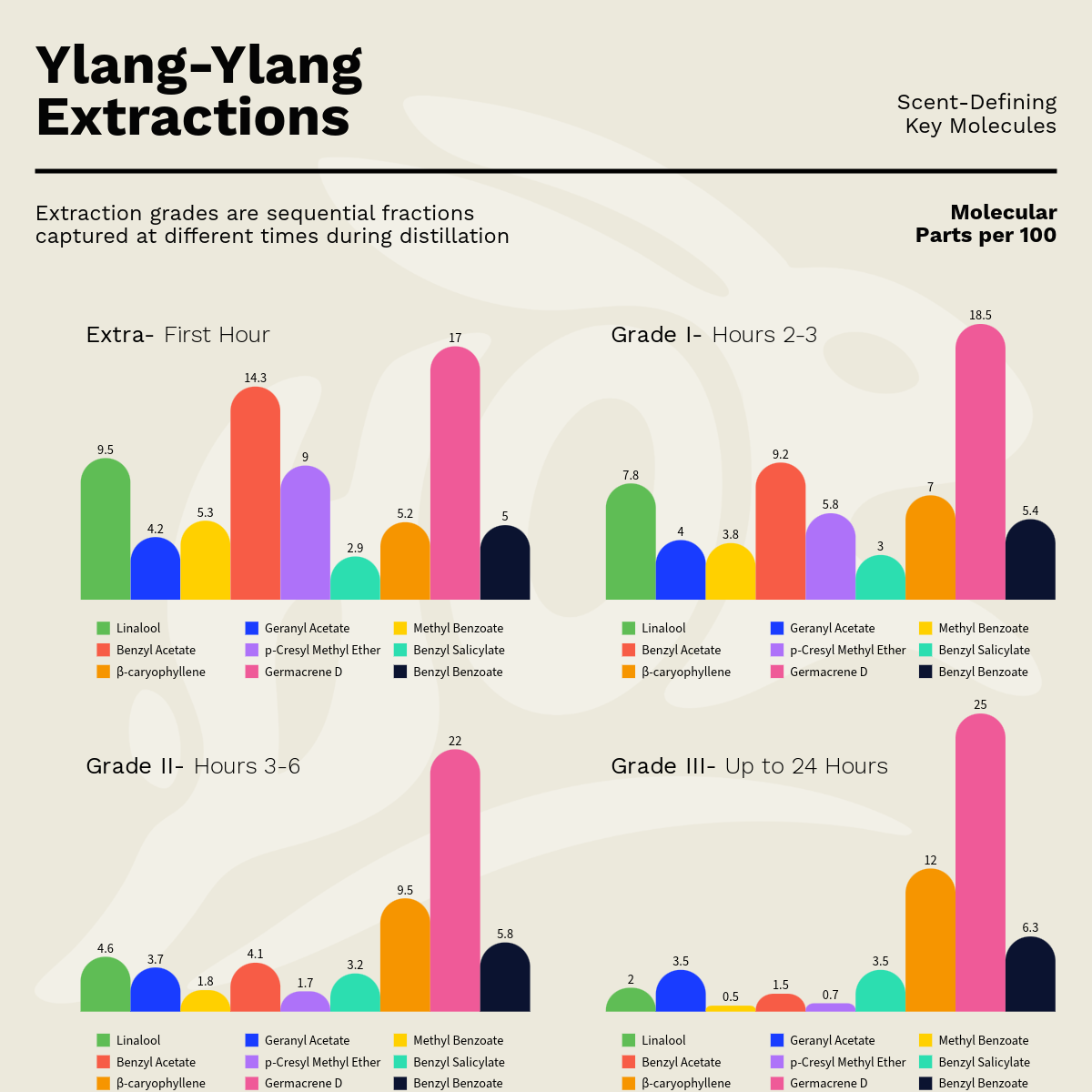
Ylang-Ylang comes in different grades, which aren’t quite a reflection of quality as much as they are of time. Grades are sequential fractions captured at different points during distillation, resulting in different scent profiles. Extra, the first pull, is the most radiant, the smell of a fresh floral bouquet, placed beside a bowl of fruit that’s been sitting in a small sun-baked cottage kitchen. Time in the still changes things. Fruity benzyl esters and floral linalool dissipate as balsamic sesquiterpenes take over, resulting in sweeter, creamier grades that feel heady and heavy.
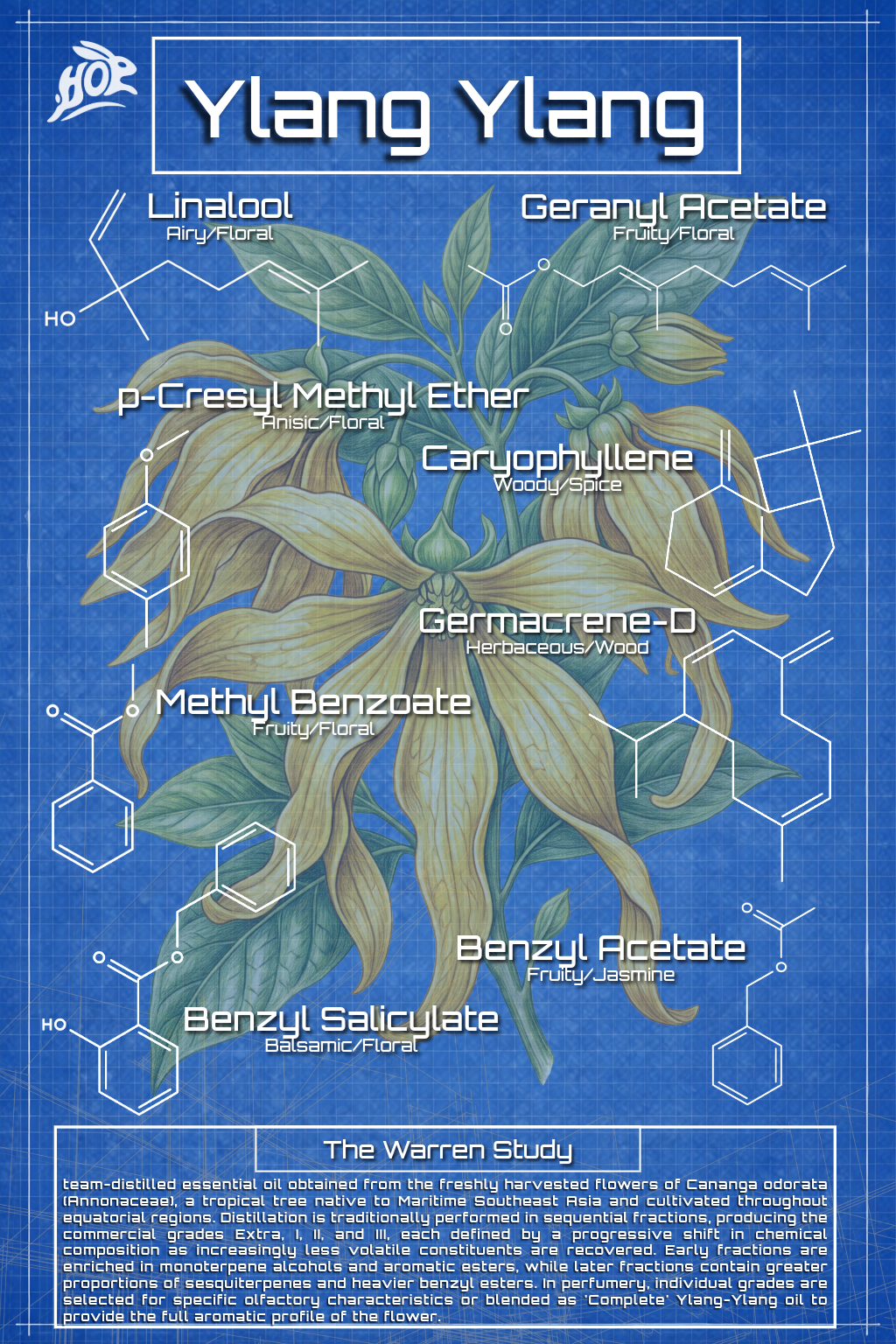
Here is the blueprint for Ylang-Ylang’s most important volatile compounds with an accompanying infographic detailing how these molecules evolve