Asian and European Plum: Prunus
Rosaceae is a fractious family. The family namesake, Rosa, is a confusing enough genus of about a hundred rose species. The genus Malus keeps things relatively simple with only 40 apple species, though it can get a bit messy with over 7,000 cultivars within these 40 species. Fragaria (Latin ‘fraga’ for fragrant) is the genus with twenty strawberry species, while Rubus, the genus of blackberries and raspberries, may have well over 1,000 species. And then there’s Prunus. Home to sweet and sour cherries, fuzzy peaches, nectarines, and apricots; even milk from almond species is in the Prunus genus. Oh, yeah, of course there is also the Plum, also a polyploid with over 2,000 different cultivars.
Perfumers don’t have the same access to plums (or any of these fruits for that matter) as fruits are filled with sugars, water, and tannins, with only trace amounts of volatile molecules that play a big role in flavor but can’t be extracted from the flesh. So we have to recreate the scent in other ways. Enter Edmond Roudnitska. Roudnitska is one of the greats. Responsible for Eau d’Hermès, Diorama, the feminine Eau Fraîche, and masculine Eau Sauvage, Miss Dior, Moustache, and, with his first release in 1944, Femme Rochas, he gave perfumery our first Plum accord with his Prunol base. Fragrantica now lists some 3300 “plum” perfumes, not including plum blossom or plum tree, liqueured plum brandy and plum wine, variants like Marian plum and green plum… There’s a LOT of plum in perfume.
Before Gas Chromatography-Mass Spectrometry (GC-MS) technology gave us the capabilities to peer into the true essence of matter, perfumers like Roudnitska relied on their developed senses, studies in chemistry, and sheer wit and artistic expression to create the scent of the unextractable. Methyl Ionone and Peach Aldehyde (not really an aldehyde but a lactone) were common ingredients. Today, perfumers have a larger toolkit to play with and the technology to pull scent profiles from anywhere in the world. GC-MS technologies can tell us not only what’s in the flowers and fruits we love so much, but they can also be applied in industries like steel recycling where companies can analyze for organic contaminants and monitor their environmental impact.
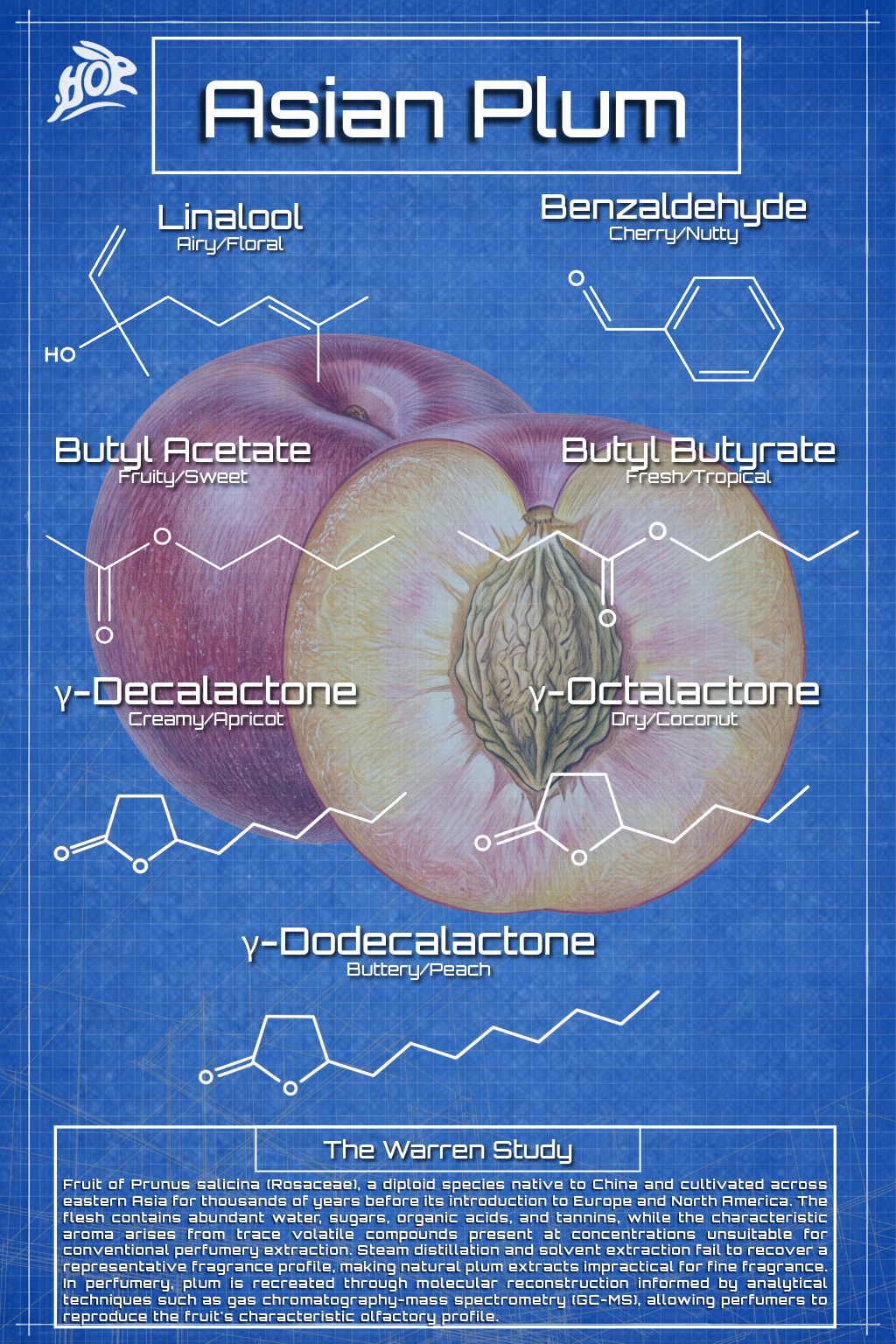
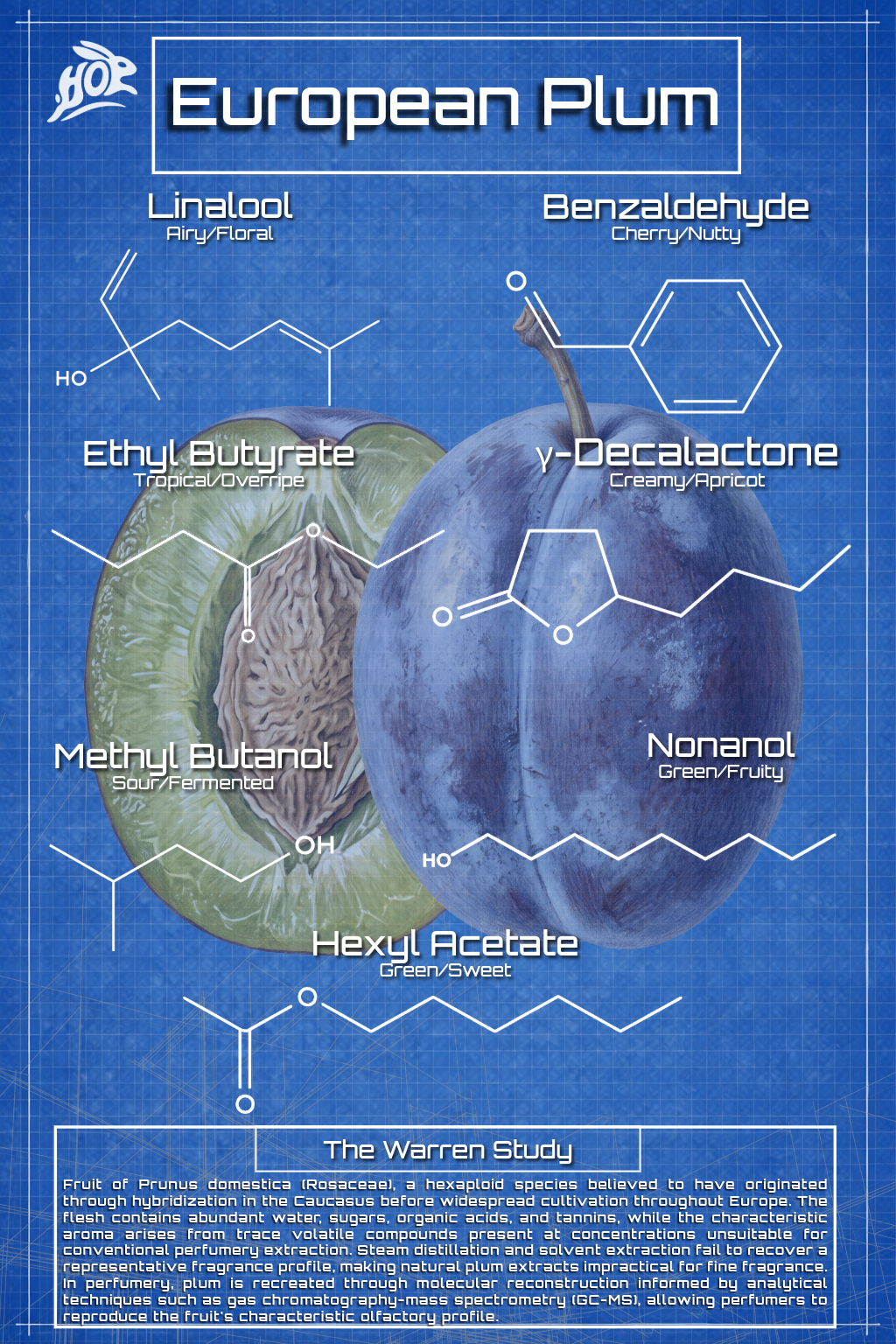
So what does GC-MS tell us about Plums? With 2,000+ cultivars, we can’t break them all down, so let’s take a look at two of the world’s most popular: The European Plum (P. domestica) and the Chinese Plum (P. salicina) and break down their most important molecular components of flavor and olfaction.