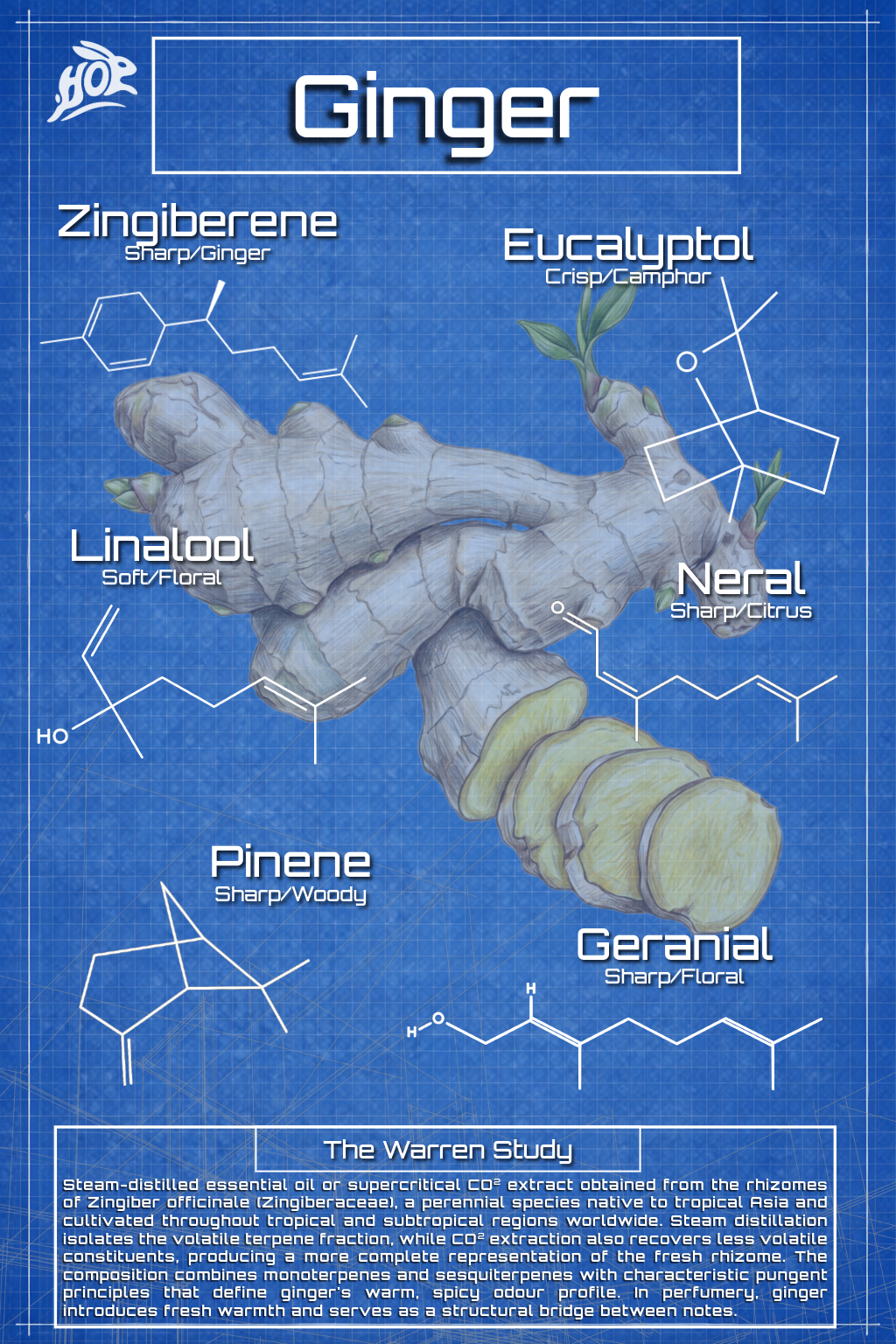
Ginger - Zingiber officinale
Bananas don’t grow on trees. They’re in the Zigiberales order of tropical monocots, usually with large flowering stalks, that spread through vast systems of creeping rootstalks called rhizomes that grow horizontally underground to propagate new roots and shoots. The largest Family, Zingiberaceae, consists of around 1600 species. Cardamom, turmeric, galangal, and true ginger are all members of this family.
Ginger was among the first spices to make the trek across the Red Sea trade routes from the Asian continent to the Mediterranean, where Greeks and Romans prized the root for its digestive support. The root was chewed by sailors from Ancient China to Caribbean pirates to prevent seasickness. Citrus wasn’t the only fight against scurvy either, as a drunken sailor would much rather a tankard of ginger beer. Ginger provides powerful antioxidant, antiemetic, antiviral, and anti-inflammatory support; it’s neuroprotective and is good for your heart, lungs, and bones.
Perfumery has been slow to catch up. It wasn’t until the 1990s that real ginger found its use in perfumery with a quality oil and, later, a more refined CO2 extract, which is preferred in the fine fragrance industry. Ellena highlighted it in 98’s ‘Declaration,’ propelling its popularity. Generally used in relatively low doses to add a fresh, warm nuance to a blend, ginger can wear a lot of different hats depending upon how it’s extracted and the terroir of its growing region. It’s truly a versatile tool in the perfumer’s organ, and here is its blueprint.